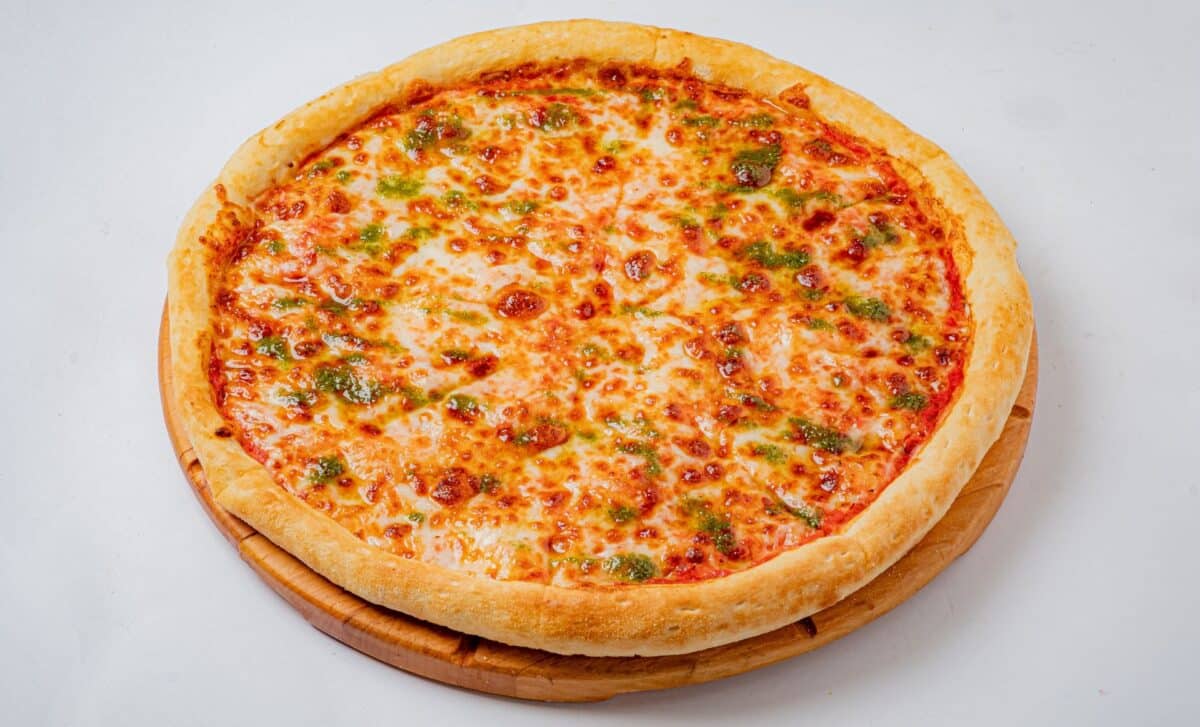
Federal regulators have classified a recall affecting HelloFresh Basil Pesto & Mozzarella Pizzas, raising the official risk level tied to a potential contamination issue. The designation provides clearer guidance on the health implications for consumers who may still have the product.
The recall, initially launched voluntarily in January, involves frozen pizzas distributed across 10 U.S. states. It stems from concerns that an ingredient used in the product could contain metal fragments, prompting both supplier action and regulatory review.
Recall Classification Clarifies Health Risks and Scope
The U.S. Food and Drug Administration has categorized the recall as Class II, a designation used when exposure to a product may cause temporary or medically reversible adverse health consequences. According to the FDA, this classification reflects a moderate level of risk rather than a severe or life-threatening hazard.
The affected product is the Basil Pesto & Mozzarella Pizza, sold in 13.90-ounce packages and distributed by Grocery Delivery E-Services of New York. The recall applies to 2,337 cases, each containing 15 packages. According to recall documentation, several specific lot codes have been identified, including batches labeled with dates such as June 29, June 30, September 4, and September 5.
The issue traces back to slow-roasted tomatoes used as an ingredient in the pizzas. According to information reported by Newsweek, an ingredient supplier alerted the company to the possible presence of metal fragments in certain lots. An internal review subsequently confirmed the tomatoes as the likely source of the contamination.
Customers who received the product between October 8, 2025, and January 23, 2026, were advised to discard it if still in their possession. Distribution of the affected pizzas reached consumers in Arizona, California, Connecticut, Florida, Illinois, Michigan, North Carolina, New Jersey, Texas, and Virginia.
Company Response and Customer Notification Efforts
HelloFresh stated that it acted promptly after being notified of the issue. A company spokeswoman said that customer safety remains a top priority and that only a limited number of customers were impacted. The company contacted those potentially affected and provided instructions on how to identify and dispose of the product.
Details of the notification process were also shared publicly through online forums. According to posts circulating on the r/hellofresh subreddit, customers received messages explaining the situation and advising them to discard any pizzas received during the specified timeframe. The notice referenced the supplier’s warning about possible metal fragments in the tomatoes and included guidance for identifying affected items through product images.
The recall itself was initiated by the supplier and remains ongoing. Bakkavor, a North Carolina-based firm associated with the recall, has not publicly commented beyond the available documentation.
While no additional actions have been announced, the FDA classification marks a key step in the regulatory process. It signals that the issue has been formally assessed and that consumers should continue to follow disposal guidance if they possess the affected product.