
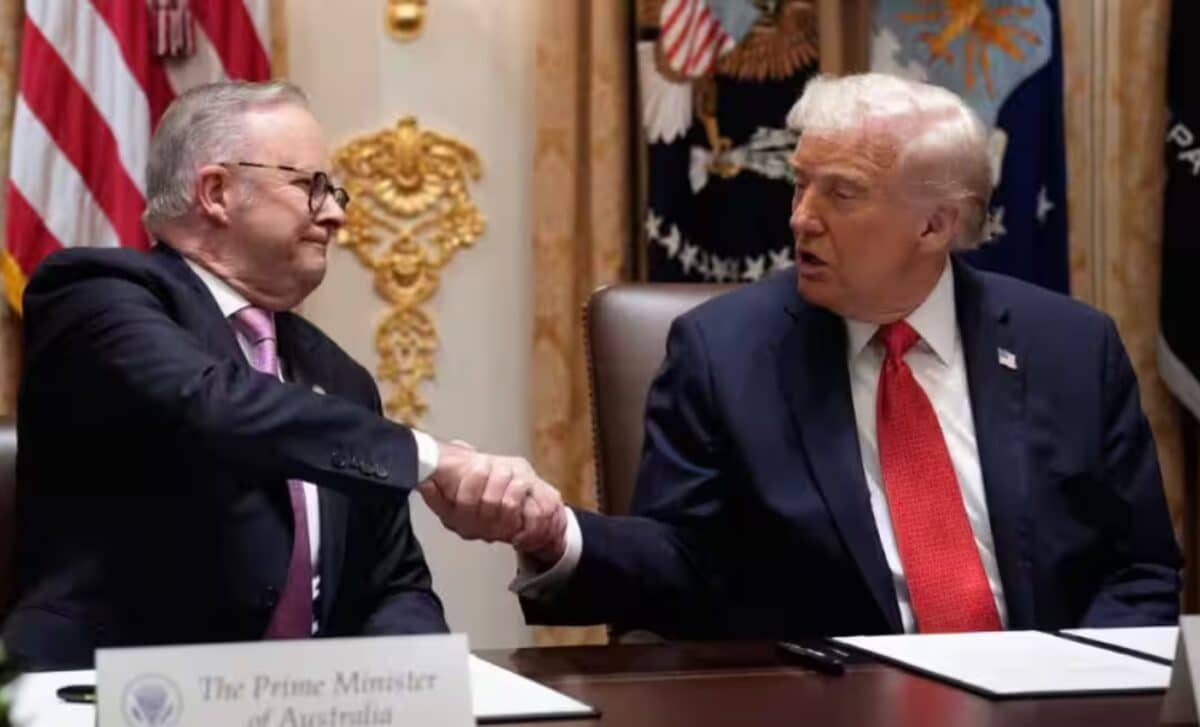
In a move that could shake up the global minerals market, the United States and Australia have forged a historic agreement focused on critical minerals and rare earths. This partnership aims to diminish China’s stranglehold on these essential resources, which are used in everything from smartphones to military tech.
The Heart of the Deal: Critical Minerals and Major Investments
The deal, announced by Prime Minister Anthony Albanese and US President Joe Biden, promises to secure a stable, long-term supply chain for vital minerals like gallium and rare earths. Both nations have pledged a combined investment of over $2 billion USD and will collaborate on a staggering $8.5 billion USD pipeline of projects. These projects will be rolled out over the next six months, mainly in Australia and the United States, reports Yahoo Finance.
Priority Projects: Alcoa and Arafura Nolans Take the Spotlight
Two Australian projects have been singled out as priority initiatives: the Alcoa-Sojitz Gallium Recovery Project in Western Australia and the Arafura Nolans Project in the Northern Territory. The Alcoa project, in particular, is a big deal—it could eventually supply up to 10% of the world’s gallium, a key material for semiconductors and solar cell production. To support this, the Australian government is contributing up to $200 million USD in concessional equity finance. Meanwhile, the US Department of Defense is investing in the project as well, securing offtake rights for the gallium it produces.
Arafura Nolans: The Future of Rare Earths in Australia
The Arafura Nolans project is no less ambitious. With a $100 million USD equity investment from the Australian government, this initiative could produce up to 5% of global rare earths, which are critical for everything from electric vehicle batteries to military equipment. These minerals are highly sought after, and the ability to produce more of them locally could significantly reduce the world’s dependency on China, which currently dominates supply chains for both gallium and rare earths.
Building More Than Just a Supply Chain: Security and Collaboration
But this isn’t just about building a supply chain. It’s about security. To ensure the long-term success of these projects, the US and Australia have established the Critical Minerals Supply Security Response Group. This new body will be tasked with identifying priority minerals, addressing supply vulnerabilities, and finding ways to expedite the delivery of processed minerals. It’s essentially a think tank that combines the expertise of both countries’ energy and resources departments to keep things moving smoothly.
For Australia, this deal signals a strong push toward becoming a global player in the critical minerals market. It’s an opportunity to position itself as an essential supplier in the global shift toward renewable energy technologies. It also provides a way to create jobs and economic growth in rural and regional areas, particularly in states like Western Australia and the Northern Territory.
Lingering Questions: Long-Term Impact and Environmental Considerations
While the deal is certainly groundbreaking, questions remain about its long-term effects. How will it impact global competition for critical minerals, and how will it reshape the dynamics of international trade? More importantly, how will the two countries ensure that these projects stay on track and that the environmental impact of mining is properly managed? These are questions that will need to be addressed as the partnership progresses.
In the end, this deal isn’t just about securing minerals—it’s about securing a future where countries like the US and Australia can stand on their own feet when it comes to critical resources. With a little bit of luck, and a lot of hard work, this could be the beginning of a new era in global trade, innovation, and energy security. Time will tell if this bold step is truly the game-changer it promises to be.