Higher interest rates were supposed to cool the housing market. Instead, prices are climbing again. Even with economic uncertainty hanging in the air, buyers are still stepping in — and the numbers are turning heads.
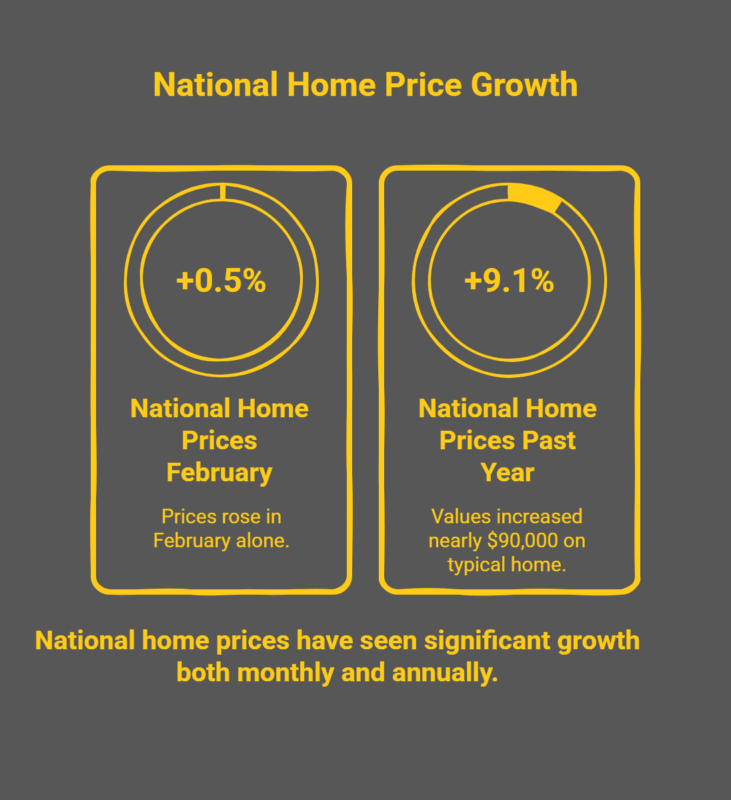
Australia’s property market has once again defied expectations. According to the latest PropTrack data, national home prices rose 0.5% in February alone. Over the past year, values are up 9.1% — an increase of nearly $90,000 on the typical home. That kind of jump, particularly in a rate-hiking environment, is not what many economists predicted twelve months ago.
Smaller Capitals Drive Housing Growth
While Sydney and Melbourne continue to see growth, the real momentum is in the mid-sized capitals. Perth recorded the strongest annual performance, with dwelling prices rising close to 20% — roughly $170,000 added in a single year. Brisbane followed with gains of nearly 16%, and Adelaide wasn’t far behind at 15%. Hobart also showed signs of renewed strength, posting the largest monthly rise in February at 1%.
Sydney’s growth, by comparison, looks more measured — 6.1% annually. But because prices are already high, that still translates to around $103,000 in added value. Sometimes percentage figures can mask the real dollar story, explains Realestate.
Why Haven’t Rate Hikes Slowed Things Down?
The Reserve Bank began tightening policy again in February, and banks quickly passed on the higher rates to borrowers. In theory, that should reduce borrowing capacity and cool buyer demand. Yet demand has held up.
Several forces are at play. Listing volumes remain low in many markets, creating competition among buyers. Construction activity has slowed, limiting new supply at a time when population growth remains strong. Add to that the federal government’s expanded First Home Guarantee Scheme — which allows eligible buyers to enter the market with smaller deposits — and you have fuel for continued competition.
Interestingly, units are now outperforming houses in several areas. With house prices already stretched, buyers appear to be pivoting toward more affordable stock. It’s a subtle shift, but an important one.
A Million-Dollar Market Becomes the Norm
One of the most striking developments is how many capital cities are hovering around or exceeding the $1 million median mark. Perth, Adelaide and Brisbane are approaching price levels that would have seemed almost unimaginable five years ago. It represents a significant transformation in Australia’s housing landscape.
Still, economists urge caution. While February’s 0.5% growth is considered strong, further rate hikes could temper momentum. A slowdown may be gradual rather than dramatic, unlike the sharper pullback seen in 2022. For now, though, the market appears resilient. Whether that resilience lasts will depend on supply, interest rates, and buyer confidence — three variables that rarely move in perfect harmony.