

Winds have swept across Australia in recent days, bringing significant disruption to various states and territories. The arrival of these gale-force winds, combined with the shift in seasonal weather, has resulted in widespread damage and power outages.
9News reports that Melbourne was particularly affected, with debris blocking transport routes and severe damage to infrastructure. The storms have prompted emergency services to respond to hundreds of calls for assistance.
While the winds are expected to ease in some regions, areas in the east continue to face warnings from the Bureau of Meteorology (BOM), signaling ongoing risks over the coming days.
Melbourne’s Day of Destruction
In Melbourne, the wild winds were more than just a nuisance. Trees were snapped in half, debris scattered across the streets, and even entire roofs were torn off homes. The damage was particularly severe in the city’s northern suburbs, with Heidelberg Heights being one of the hardest-hit areas. Residents there had to deal with significant property damage, with some homes completely exposed to the elements.
The winds, which reached speeds of over 100 km/h, prompted emergency services to respond to more than 500 calls for assistance throughout the day. Melbourne’s airport recorded the strongest gusts, further compounding the already difficult situation for those trying to go about their daily routines. Suburban train services were also affected, as fallen branches and other debris blocked the tracks, forcing commuters to take buses as alternatives.
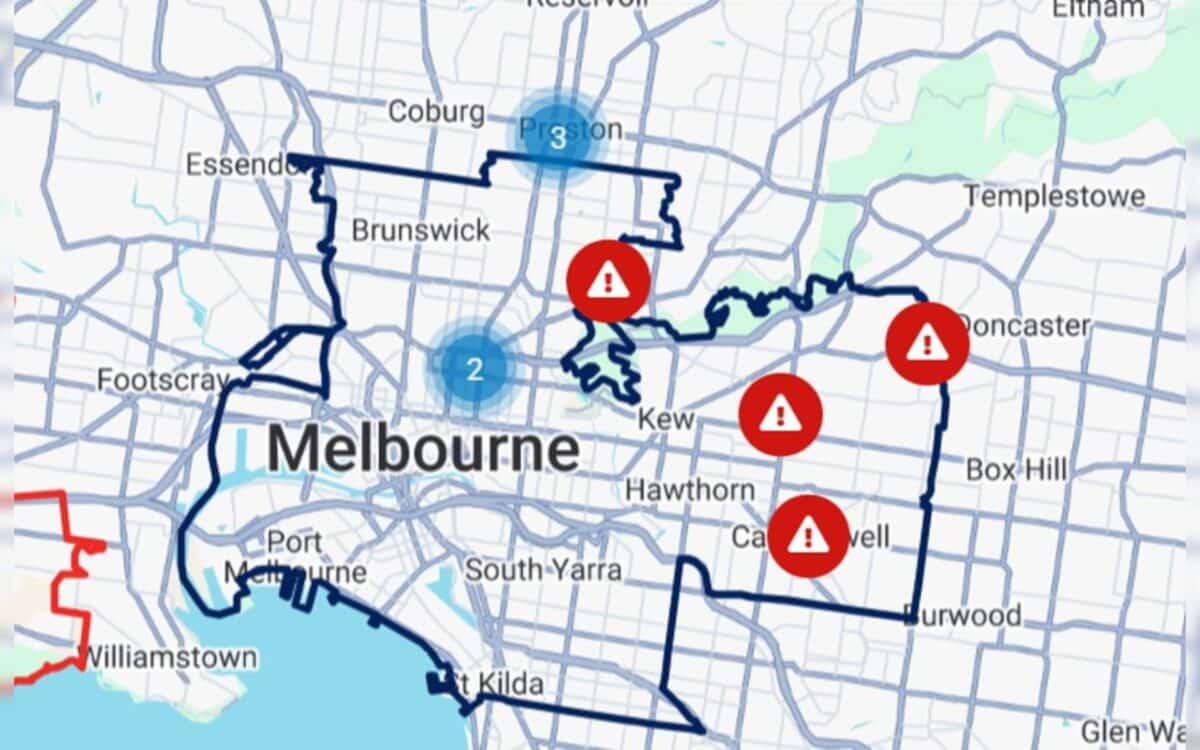
By midday, more than 3,000 properties across Melbourne lost power, leaving residents in the dark for hours. Among the worst-affected areas was Reservoir, where Summerhill Road’s businesses struggled to operate without electricity. Some shop owners soldiered on, hoping that the power would return soon enough, but the outages were widespread, and the recovery would take longer than expected.
A Broader Regional Impact
While Melbourne may have felt the brunt of the storm, other regions weren’t spared from the fury of the winds. South Australia saw significant damage in rural areas, although the winds started to die down by the afternoon. However, the Bureau of Meteorology (BOM) warned that the east of the country would continue to feel the effects into the coming days, including parts of New South Wales, the Australian Capital Territory, and Tasmania.
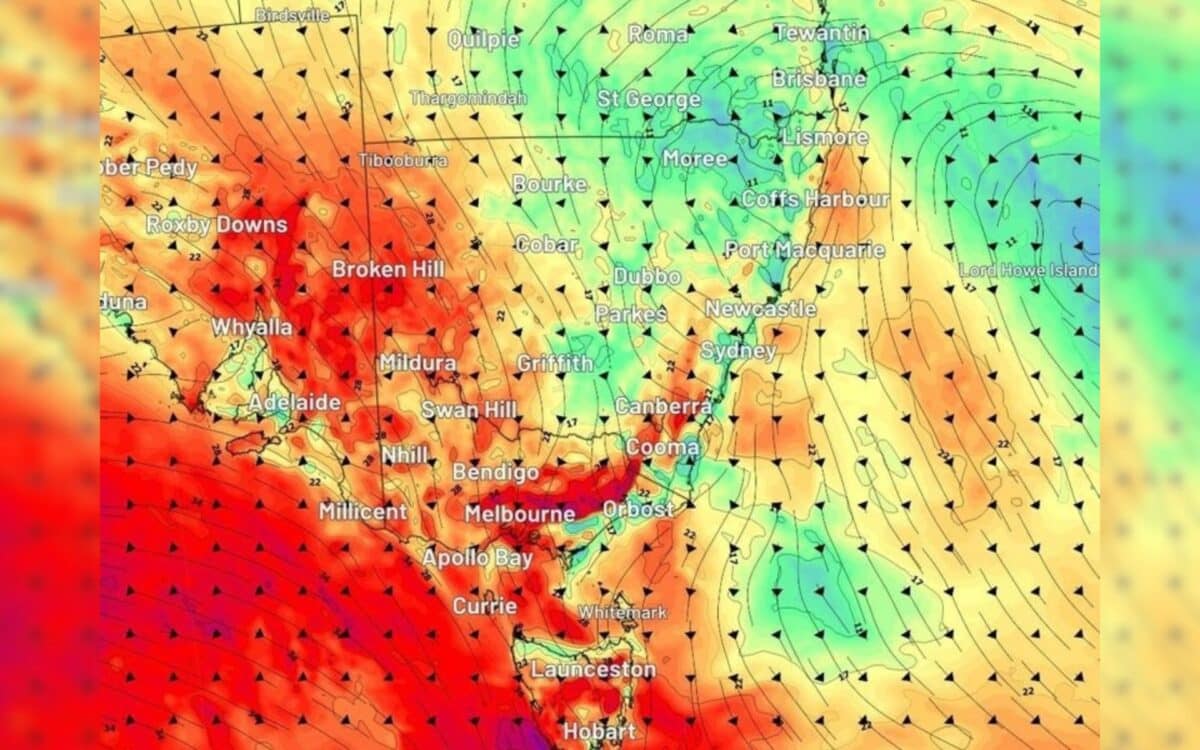
Warnings remain in place for regions like the South Coast, Southern Tablelands, Snowy Mountains, Australian Capital Territory, and South West Slopes Forecast Districts in New South Wales, as well as Tasmania’s Western, Upper Derwent Valley, South East, Central Plateau, and parts of North East, East Coast, Midlands, North West Coast, and Central North.
The BOM reported that the damaging winds in these areas will continue as the storm system moves eastward.
The winds have now eased in western and central Victoria, but the BOM indicated that they would persist in eastern Victoria through Tuesday. Meanwhile, damaging winds are headed for parts of NSW and the ACT, continuing to threaten regions already affected by the storm.
Winds Ease, But Australia’s Weather Remains Unpredictable
Looking ahead, the weather in Australia is expected to remain a mixed bag. While the winds will eventually ease in many areas, the general trend for the next few days includes warmer temperatures, particularly in Sydney and Brisbane.
For example, Sydney saw a high of 26°C, with sunny skies, and temperatures are forecast to rise to 28°C tomorrow. In Brisbane, a sunny day brought 25°C, and Wednesday is set to be the hottest day of the week with a peak of 30°C. Temperatures across most regions will sway between the low and high 20s for the rest of the week.
However, not all of Australia will bask in sunshine. Adelaide is experiencing rain throughout the week, with temperatures dipping to a chilly 17°C tomorrow. Hobart, in Tasmania, will see temperatures remain below 20°C for the rest of the week, with cloudy skies and possible showers. Meanwhile, Canberra reached a high of 21°C today, but cooler temperatures and rain are expected in the coming days.
In contrast, Darwin will stay hot with temperatures in the 33-34°C range for the entire week, while Perth will start the week cold and rainy, with a high of 17°C, but sunny skies and 26°C temperatures are predicted by the weekend.