

Australia’s productivity growth has been a topic of increasing concern in recent years. Recent data shows a decline in productivity growth, prompting discussions about the potential economic implications for the country. According to a report from 9news, Australia’s productivity has been on a downward trend, which raises questions about the future of the workforce and living standards.
The challenges surrounding this issue have led to a series of debates on how to address the situation. Experts suggest that a variety of factors may be contributing to this slowdown, and solutions remain under discussion by key policymakers.
The Importance of Productivity in Australia’s Economy
Productivity is a critical measure of how efficiently resources are used in an economy to generate output. In Australia, productivity refers to how much value is produced by workers and businesses using resources such as labor and capital. When productivity increases, it typically leads to higher wages, more goods and services, and an improved standard of living for the population.
In recent years, however, Australia’s productivity growth has slowed, causing concern among economists and policymakers. The latest data from the Australian Bureau of Statistics reveals that productivity growth dropped to just 0.9% in 2022-23, down from 1.2% the previous year and 1.8% in 2003-04. This decline highlights a troubling trend in the country’s economic performance.
Why Is Productivity Growth Slowing?
Several factors are contributing to the slowdown in Australia’s productivity growth. One of the main reasons is the global trend of stagnating productivity in developed countries. While the specific causes are complex, many experts point to changes in the workforce and technological advancements that have not yet translated into higher efficiency across industries.
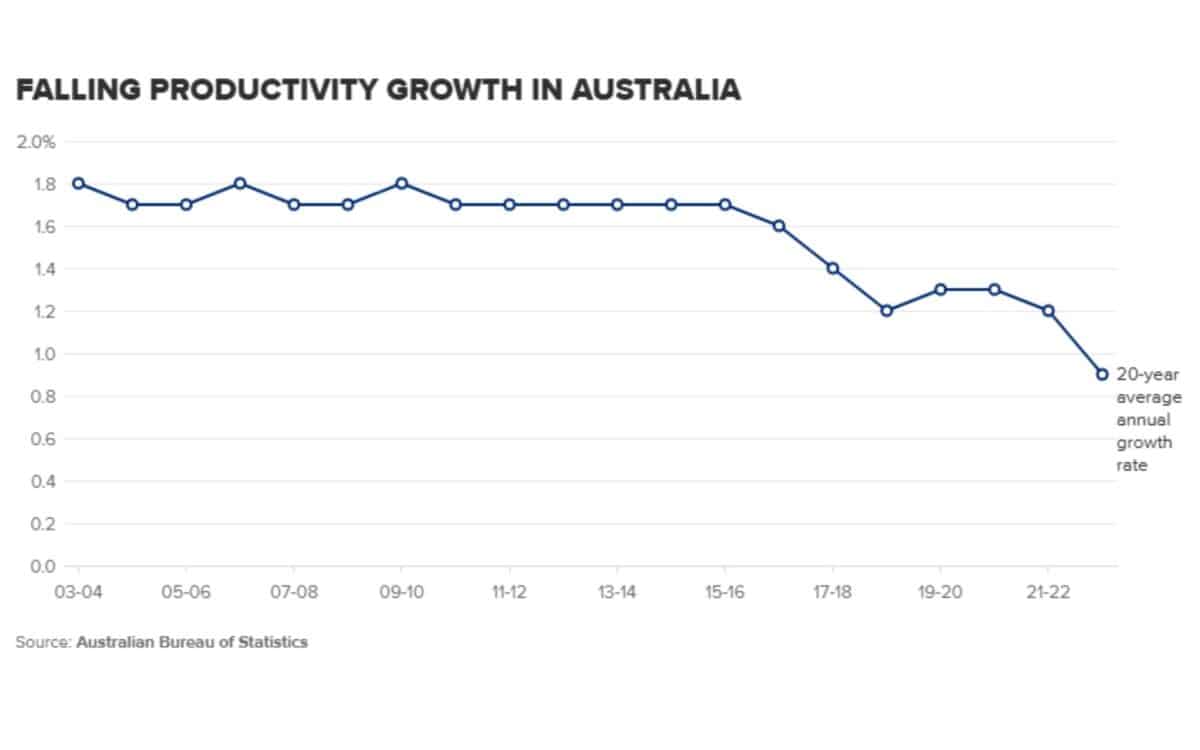
Additionally, slower innovation and investment in capital have also contributed to the decline. Some argue that Australia’s labor market, characterized by a growing number of part-time and casual workers, is less productive compared to other nations with a more stable and skilled workforce.
Experts warn that the slow growth in productivity could have severe long-term consequences. For instance, without productivity growth, businesses are unlikely to increase their output without raising the cost of their goods and services. This can lead to higher prices and stagnant wages, which in turn reduces the purchasing power of workers and lowers living standards.
The Productivity Commission has estimated that by 2035, full-time workers could be $14,000 worse off annually if productivity growth doesn’t improve. The Reserve Bank of Australia (RBA) has also revised its productivity growth forecast, lowering it from 1% to 0.7% per year for the medium term, signaling growing concerns about future economic performance.
What’s Being Done to Address the Issue?
In response to the growing concern, the Australian government has set up an economic reform roundtable to explore solutions to the productivity problem. The roundtable, scheduled for August 19-21, 2025, will involve discussions with business leaders, unions, and economists. Prime Minister Anthony Albanese has emphasized that addressing productivity is crucial for Australia’s economic future, but has also pointed out the importance of tax reform.
No sensible progress can be made on productivity, resilience, or budget sustainability without proper consideration of more tax reform – Albanese told the National Press Club in June.
He reiterated his stance, saying,
The only tax policy that we’re implementing is the one that we took to the election
And reminding everyone that he and his ministers have the final say on any productivity solutions, stating that governments make government policy.
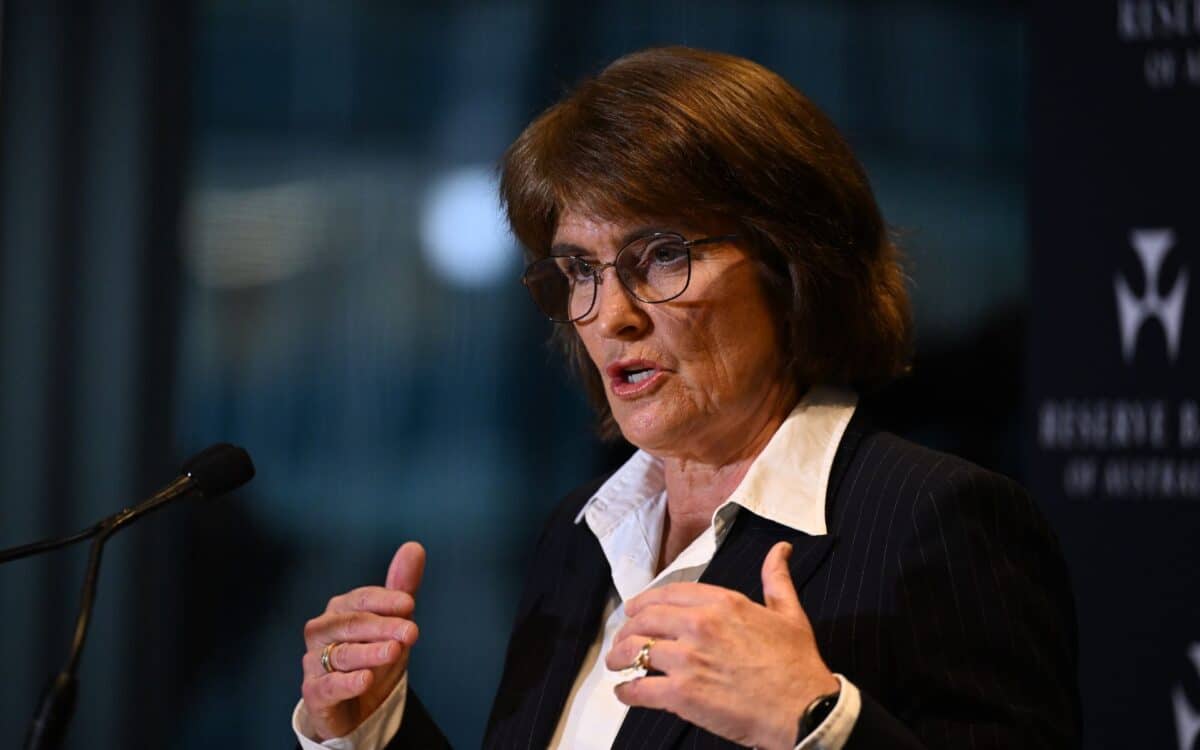
The government is exploring a range of solutions, including tax reforms, investments in technology, and the potential introduction of a four-day workweek. However, the success of these proposals remains uncertain. Michele Bullock, the governor of the Reserve Bank of Australia, highlighted the direct link between productivity and wages.
Real wages are not rising by very much, because that’s the implication of slow productivity growth – Bullock stated on August 12. She added,
If we can get productivity growth up, that will allow for more growth in real wages, which is ultimately good for Australians.
Experts are calling for bold reforms that could help reverse the trend, but some are skeptical about the government’s willingness to implement large-scale changes. Many hope that the roundtable will lead to concrete actions that will address the root causes of productivity decline. Economist Richard Holden expressed cautious optimism:
That’s the question: is the upcoming August 19 roundtable going to be a moment for genuinely thinking about bold ideas? Or is it going to be another one of these pro-forma… we have three days, we’ll put out a press release and we go back to normal? I hope it’s the former.