House prices in Australia have been on a wild ride lately. While some cities see prices soar, others are stuck in a bit of a slump. If you’re thinking of buying or selling soon, here’s the latest data—and why you might want to think twice about where you’re putting your money.
Rising and Falling: The Big Picture
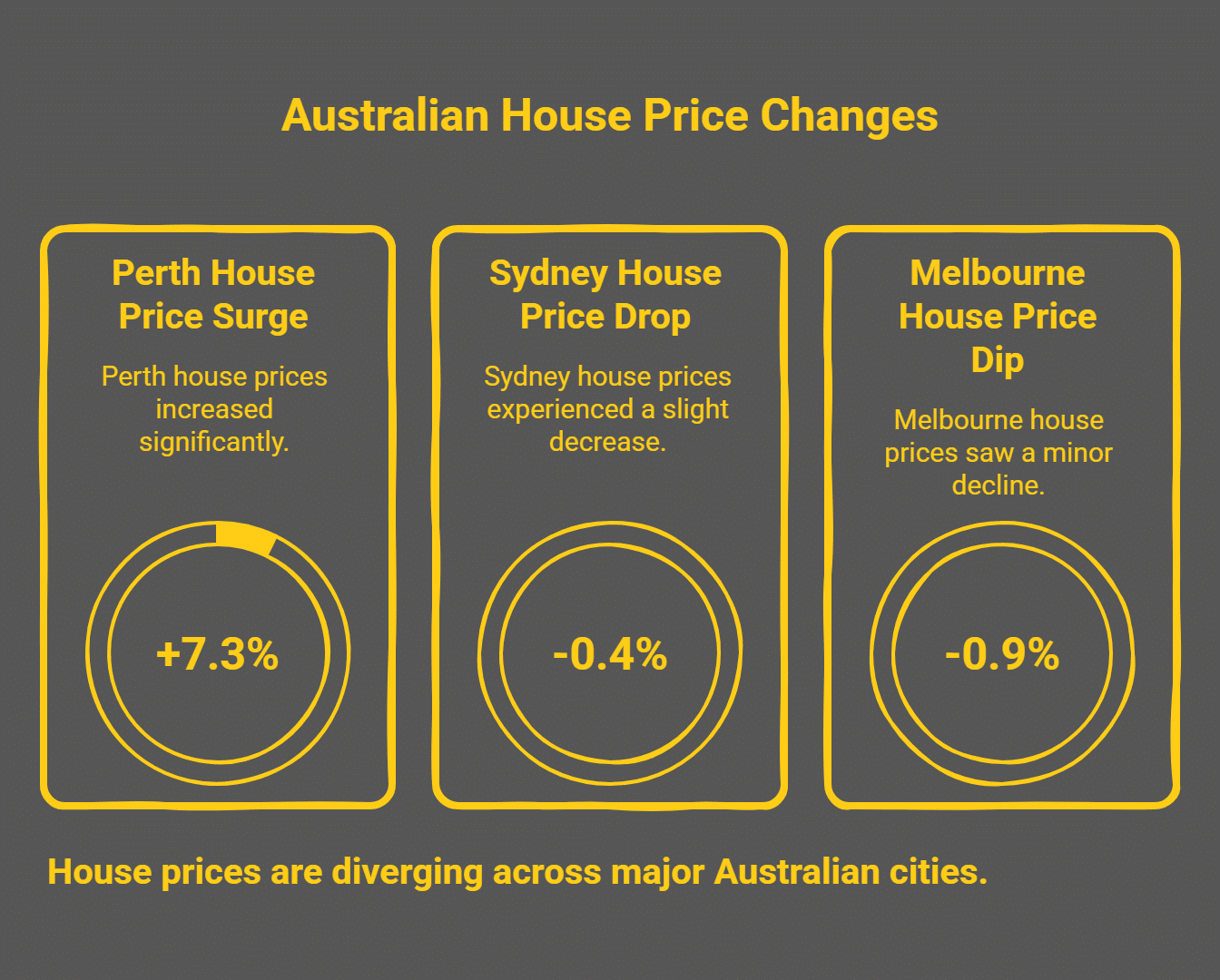
In the first quarter of 2026, national house prices have seen a 2.1% rise, but this increase is far from uniform. Perth, for example, has seen a dramatic surge in house prices—up 7.3%. At the same time, Sydney and Melbourne are heading in the opposite direction. Sydney’s house prices dropped by 0.4%, and Melbourne saw a slight dip of 0.9%. It’s a clear sign that the housing market is no longer the same across the board.
What’s Driving the House Price Divergence?
So, what’s going on? According to experts, the divide comes down to supply and demand, reports ABC. Perth’s property market is struggling to keep up with the demand from a growing population, leading to limited supply and higher prices. There’s just not enough housing to go around, which puts upward pressure on costs.
On the flip side, Sydney’s housing market is feeling the pinch of high affordability constraints. With the median house price sitting at a hefty $1.3 million, fewer buyers can afford to enter the market, which is slowing down price growth. Melbourne, meanwhile, is experiencing a market that’s well-supplied but facing the weight of interest rate hikes, which have made many buyers hesitant.
Interest Rates and Consumer Sentiment
But that’s not the whole story. Rising interest rates are playing a significant role in the cooling of the housing market across the nation. With the cash rate currently sitting at 4.1%—and possibly rising further—buyers are becoming more reluctant to take the plunge. The uncertainty around future rate hikes, energy prices, and overall inflation is making many people pause before making any big property decisions.
This reluctance is reflected in recent auction clearance rates, especially in Sydney. When clearance rates drop below 50%, it often signals a market that’s either flat or heading toward a downturn. And while house prices haven’t yet fallen drastically, experts predict that the slowdown could continue and price declines might follow in the near future.
What’s Next for the Market?
As we move through 2026, it’s clear that the housing market is in a period of transition. Some cities, like Perth and Brisbane, are still seeing strong growth, while others, like Sydney and Melbourne, might be hitting a bit of a wall. If you’re looking to buy or sell, it’s important to keep a close eye on interest rates and market trends, because things might change faster than you think.