
Australians are feeling the pinch at the pump as fuel prices surge, but how do these increases stack up against other countries? While rising costs are causing concern locally, Australia’s fuel prices are still relatively moderate compared to some parts of the world. So, why is Australia experiencing this price surge, and how do our prices compare on the global stage?
Why Are Prices Rising?
The jump in fuel prices in Australia has a lot to do with global disruptions. Most notably, the ongoing war in the Middle East has created a ripple effect across the world, driving up oil prices. Iran’s blockade of the Strait of Hormuz, which is crucial for global oil shipments, has added significant pressure to global supply chains. This has impacted petrol prices in Australia, with the average cost of fuel rising by nearly 50 cents per litre in just a couple of months.
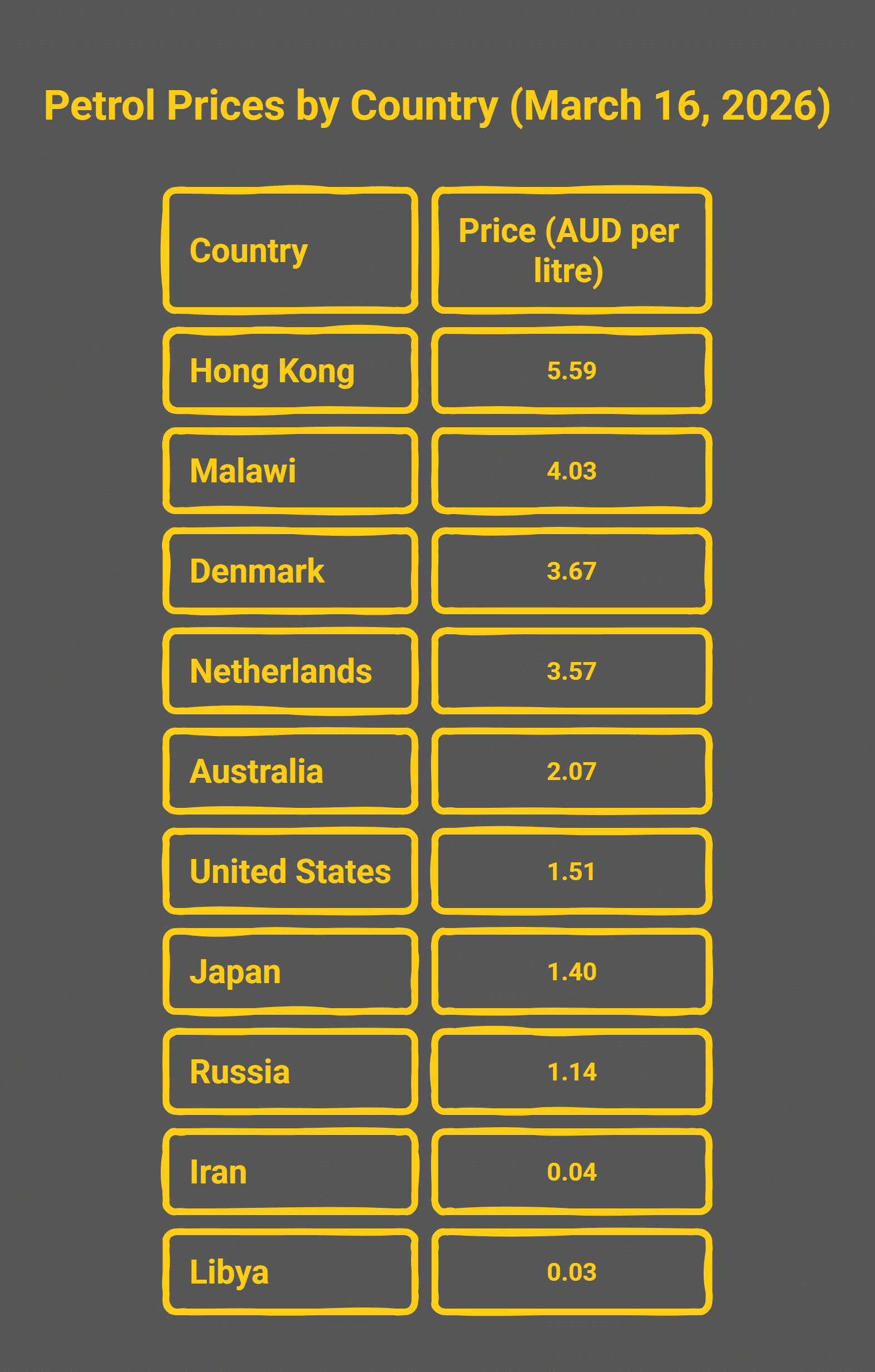
Despite these rising costs, Australia’s fuel prices are still sitting in the mid-range globally. According to GlobalPetrolPrices.com, Australia ranks 61st in the world for fuel price per litre, which is better than some countries but still higher than others, particularly the United States, where fuel prices are dramatically cheaper. In March 2026, Australians were paying around $2.07 per litre, which, while higher than usual, is still lower than in many of Australia’s OECD neighbours.
Australia’s Unique Fuel Challenges
Australia’s geography and its heavy reliance on imported fuel set the country apart from others. Nearly 90% of Australia’s daily fuel consumption comes from imports, primarily refined products from countries like South Korea, Japan, Singapore, and Malaysia. The country also only has two refineries, which limits its ability to produce fuel domestically. This makes Australia especially vulnerable to global disruptions. When supply chains are strained, it can take a while for fuel to reach the country’s remote regions, which results in both price increases and local shortages.
Mark Humphrey-Jenner, an Associate Professor of Finance at the University of New South Wales, explained to SBS that these issues set Australia apart from countries like the US, which produces a much larger share of its own fuel. The US also benefits from having a more efficient system of refineries, making it easier to maintain stable prices even during times of global unrest.
What About Fuel Taxes?
Another factor influencing the price at the pump is Australia’s fuel excise tax, which sits just under 50 cents per litre. While this tax helps fund road infrastructure and other public services, it also contributes to the overall cost of fuel. Despite some calls to reduce the tax, especially during times of price volatility, experts caution that cutting the excise could lead to more consumption, worsening supply issues and even creating the need for rationing.