
Australia is about to see a big shift in the way superannuation is taxed, and it could have serious consequences for wealthier investors. With the $3 million superannuation tax change now confirmed, the government is preparing to implement new rules that will see higher taxes for those with large super balances. These changes are being hailed as a “once-in-a-generation opportunity” for progressive tax reform, but there’s still some debate about whether it’s the right approach.
What’s Changing in the Superannuation Tax System?
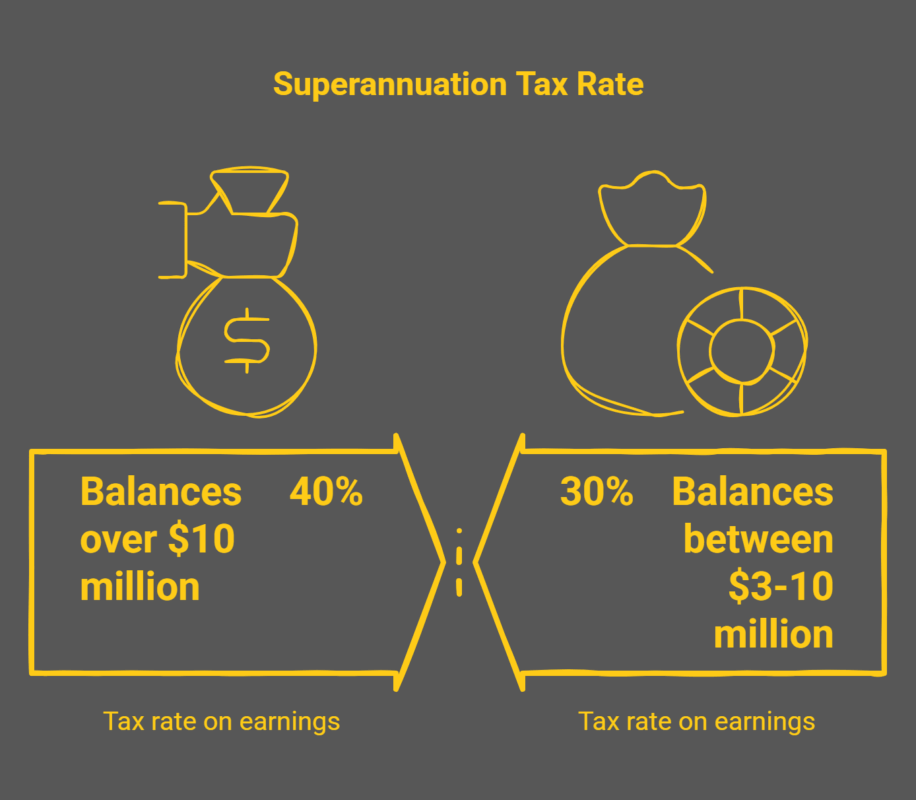
The new superannuation tax rules are straightforward: balances over $3 million will now be taxed at a higher rate. Specifically, earnings from super accounts with balances between $3 million and $10 million will be taxed at 30%, up from the current 15%. For balances exceeding $10 million, the tax rate will jump even further to 40%.
This change comes after three years of discussion and revisions. Originally proposed under the Labor government, the changes are now set to be passed in parliament, with implementation slated for July 1 of this year. The Greens have confirmed they will support the new tax rates, which clears the way for the reforms to pass without any major roadblocks.
Concerns About Unintended Consequences
While the tax hike on superannuation earnings has received praise from some quarters, it hasn’t been without controversy. Critics argue that the new rules could create unintended consequences, particularly for those with large self-managed super funds (SMSFs). Under the revised policy, the tax will be levied on either the start-of-year or end-of-year balance, whichever is higher.
This could lead to situations where investors end up paying tax on amounts that are no longer in their accounts due to market fluctuations. For instance, if the market drops significantly during the year, but the tax is calculated based on a higher start-of-year balance, investors could end up paying taxes on funds they no longer have. Peter Burgess, the CEO of the Self-Managed Superannuation Fund Association, has raised concerns that these scenarios could leave investors facing higher-than-expected tax bills.
The Bigger Picture: A Shift Toward Fairer Taxation?
The government has defended the changes as a way to ensure that the wealthiest Australians are paying their fair share. According to Nick McKim, the Greens treasury spokesperson, the new tax regime is a “down payment” on further tax reforms that could lead to a more progressive taxation system overall, reports Yahoo Finance.
The government is also planning to increase the Low Income Superannuation Tax Offset (LISTO) threshold from $37,000 to $45,000, which would boost payments to lower-income earners from $500 to $810. The aim is to make the system more equitable and ensure that lower-income earners benefit from the changes as well.
What Does This Mean for the Future?
These tax changes are just the beginning of what some see as a much-needed overhaul of the Australian tax system. With the wealthiest Australians set to pay more, many are wondering if this is a sign of bigger reforms to come. Labor and the Greens have long advocated for a fairer tax system, and these superannuation changes could be the first step toward that goal.
For now, those with super balances over $3 million should take note of the upcoming changes. While it’s a relatively small group of people who will be directly impacted, the new rules could set the tone for future policy reforms. And, as with any major reform, there will likely be more debate in the months to come about the economic effects and fairness of these changes.