
Melbourne’s office market is feeling the pressure like never before. With office vacancy rates hitting a 30-year high, the city is grappling with a growing number of empty office spaces. This rise in vacancies is coinciding with the state’s looming work-from-home legislation, which could make matters even worse for an already struggling property market. Here’s what’s going on and why it matters for businesses, employees, and the economy.
Vacancy Rates Reach Alarming Levels
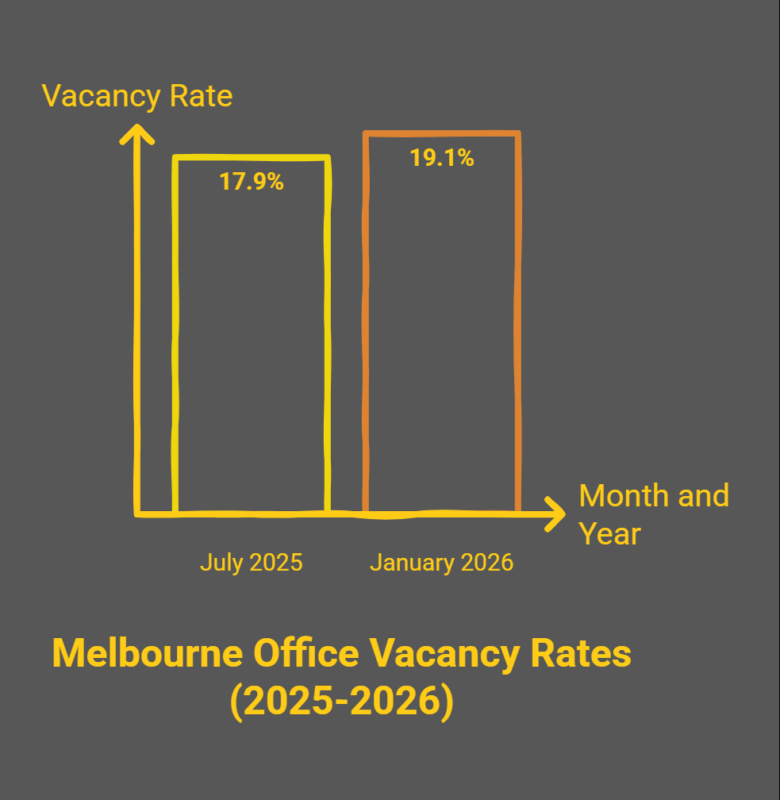
In January 2026, Melbourne’s office vacancy rate reached 19.1%, a significant jump from 17.9% in July 2025. This marks the highest vacancy rate the city has seen since 1997, and it’s raising serious concerns about the future of office space demand. According to the Property Council of Australia, this trend is a reflection of the harsh economic environment and rising taxes that have made it harder for businesses to keep up with operating costs in the city, reports 9News.
One of the contributing factors to this increase is the surge in new office space. In just one year, 100,000 sqm of additional office space was added to the Melbourne market, which has only made the vacancy crisis worse. It’s a classic case of supply outweighing demand, as businesses are opting for smaller, more flexible spaces—or moving to areas outside the Central Business District (CBD).
Work-from-Home Legislation: Adding Fuel to the Fire
But there’s more to the story. Victoria’s new work-from-home legislation is expected to have an even bigger impact on office demand. Under the new rules, employees in both the public and private sectors will be legally entitled to work from home for at least two days a week. While the legislation is designed to offer workers greater flexibility, it could further dampen demand for office space, particularly in the CBD.
The rise of remote work has already forced many businesses to reconsider their office needs. With fewer employees coming into the office, companies are increasingly choosing hybrid models, where workers split their time between home and the office. The new law, set to be introduced in 2026, will likely accelerate this shift and further erode the need for large office buildings in the heart of Melbourne.
The Long-Term Outlook: Opportunities Amidst Challenges
Despite the rising vacancies, Cath Evans, Executive Director of the Property Council of Victoria, remains optimistic about the long-term future of prime office space in Melbourne. Evans believes that while vacancy rates are concerning, Melbourne will continue to be an attractive destination for businesses, especially in the CBD. In her view, the increase in supply offers real opportunities for tenants who are looking to take advantage of lower rents and the increased availability of space.
Yet, it’s hard to ignore the broader economic implications. With the city’s property sector already battling economic headwinds and dealing with higher taxes, the outlook is far from rosy. The Business Council of Australia has voiced concerns that the work-from-home legislation could lead to a reduction in investment and a loss of jobs, especially in sectors that heavily rely on physical office spaces.
The Road Ahead: Will Melbourne Adapt?
As the work-from-home shift continues, the big question is whether Melbourne’s office market can adapt. While there is long-term faith in prime office spaces, it remains unclear how businesses will navigate this rapidly changing landscape. With vacancy rates climbing and remote work becoming more entrenched, the city may have to rethink how it uses its office space in the future.
For businesses, the pressure is on to downsize, renegotiate leases, or embrace flexible work environments. For workers, the benefit is clear: more options for work-life balance and a greater say in where and how they work. For the property market, it’s a balancing act — can Melbourne keep up with these shifts while still maintaining its place as a hub for business and commerce?