

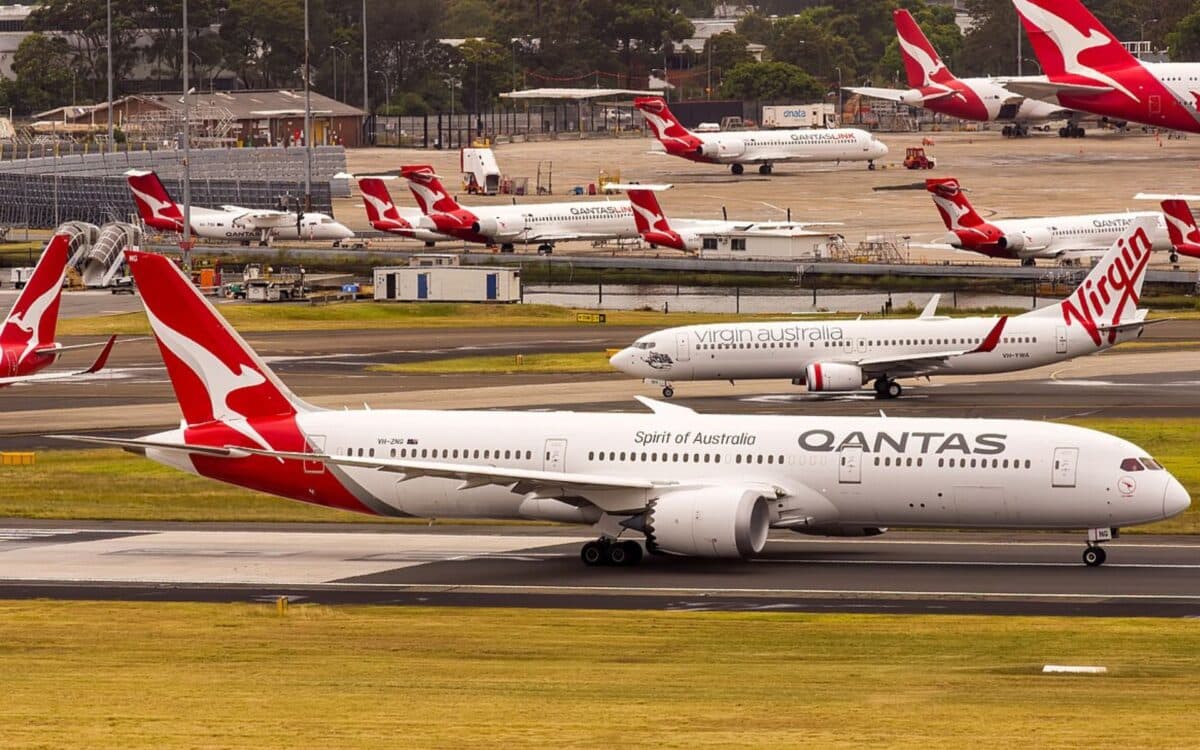
Qantas is defending a proposed change to its ground operations, which would consolidate responsibility for managing aircraft doors and stairs into a single workgroup. The airline argues this move will enhance safety and control, but concerns have arisen following a recent incident where a Jetstar plane taxied with an open cargo door, sparking debate over the impact on safety.
The Rationale Behind the Change
Qantas has been working to improve its safety procedures, particularly concerning how its aircraft doors are operated. According to the airline, the introduction of a single workgroup responsible for both opening and closing the aircraft doors and handling the stairs will streamline operations and reduce risk.
A spokesperson from Qantas stated that the change would,
“make our operations more safe, not less.” This proposed adjustment comes after the airline conducted an internal review, which revealed that the current setup, where two different teams manage these tasks separately, may increase the likelihood of safety risks.
The spokesperson elaborated, saying,
“We recently conducted a review which found that having the same team responsible for both tasks reduces risk and is in line with industry best practice.”
This approach, they claim, is aimed at aligning Qantas’s operations with global safety standards. Additionally, Qantas reassured its employees that the change would not affect customer service agent hours. While the airline is positioning this move as a step toward enhancing safety, the proposal has not been without controversy, particularly among union representatives and other industry watchdogs.
Union Concerns and Criticism
The Australian Services Union (ASU) has voiced strong opposition to the proposed changes. The ASU argues that consolidating responsibilities for both tasks into one workgroup could pave the way for outsourcing vital safety functions, which would, in turn, jeopardize the safety and security of passengers. Australian Aviation reported that ASU assistant national secretary Scott Cowen criticized Qantas’s rationale, calling the move “cynical and misleading.” According to Cowen, the airline’s claim that the change would reduce risks is not credible. He believes that the real motivation behind the change is to offload responsibility for passenger and staff safety to third-party outsourced companies. This, he argues, could undermine the level of safety provided by directly employed, highly trained staff.
“Our members do vital work each day, to get Aussies where they need to go and they do it safely and securely. Shifting their responsibility to keep people safe is not the way to go,” said Cowen.
This criticism draws attention to the broader issue of outsourcing in the airline industry, a practice that many believe could lead to cost-cutting measures at the expense of safety.
The Jetstar Incident: A Wake-Up Call
The controversy surrounding Qantas’s new procedures is compounded by a recent incident involving its subsidiary, Jetstar. Earlier this month, a Jetstar aircraft was seen taxiing on the tarmac with its cargo door open, which drew widespread concern. According to the airline, the cargo door had been left open after a piece of oversized luggage was added to the hold. The crew was unaware of the open door until they received a notification from the aircraft’s systems, prompting them to return to the gate.
Qantas has since addressed the situation, assuring the public that there were no safety risks involved. The airline emphasized that the plane’s multiple system safeguards ensured that it could not take off with an open cargo door. Despite these reassurances, the incident has prompted further scrutiny of the airline’s ground operations and highlighted the risks of having multiple parties involved in safety-sensitive tasks. This event may have been a driving factor in Qantas’s decision to streamline the process and consolidate responsibilities under one workgroup.
Is This Change Really About Safety?
The core question at the heart of this debate is whether Qantas’s proposed changes will genuinely improve safety or if they are more about reducing operational costs. Qantas argues that consolidating duties for door operations and stairs will reduce human error, which is essential in ensuring the safety of the aircraft and its passengers. However, the ASU remains steadfast in its belief that this could result in a degradation of safety standards if responsibilities are outsourced to less experienced third parties.
In the wake of the Jetstar incident, which involved a lapse in ground handling procedures, the question of accountability becomes even more pertinent. Could centralizing responsibilities in one workgroup be the solution, or is it simply a way for Qantas to shift risks onto third-party contractors while reaping the cost savings?








if the Jetstar plane had become airborne and climbed to around 8000m the plane may have imploded caused a downward spiral. No thank you Qantas. Your company is lying with this one and should revert to the Union approved system of safety. Top of the tree should be trimmed as all they care about is their own pockets and not one other single paying passenger