
The Albanese government’s promises to drastically cut electricity prices through renewables are in serious trouble. Despite ambitious claims that a renewables-driven energy revolution would save Australians money, new data reveals a sharp 25% rise in power bills. With the phase-out of key subsidies, the government’s plan is facing tough questions.
Rising Power Costs and the End of Rebates
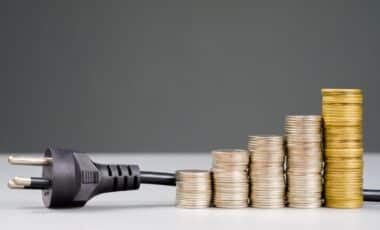
The government’s plan to reduce electricity prices hinges on a swift rollout of renewable energy. But as subsidies disappear, Australian households are seeing a steep increase in power costs. According to the Australian Bureau of Statistics (ABS), electricity prices jumped 24.6% in the year to August 2024, a figure that’s hard to ignore.
For many, the end of hefty rebates in Queensland, Western Australia, and Tasmania is a hard pill to swallow. In these regions, rebates once provided significant relief, such as $1,000 in Queensland, $400 in WA, and $250 in Tasmania. But as these programs phase out, the sticker shock has been palpable.
The Impact of Subsidy Withdrawals on Electricity Bills
For those wondering just how significant the impact was, ABS head of price statistics Michelle Marquardt was blunt: “Excluding the impact of the various changes in Commonwealth and State electricity rebates over the last year, electricity prices rose 5.9%”, reports Sky News. Without these subsidies, households are facing a far tougher financial landscape.
While prices have fluctuated in some areas due to new federal energy rebates in NSW and ACT, the bigger picture remains worrying. State-based rebates, which were once far more generous, are no longer on the table. And with inflation pushing up other household costs, including food and housing, Australians are feeling the pinch in almost every direction. As a result, overall inflation spiked to 3% in August, its highest in a year.
Is Renewables Really the Cheapest Option?
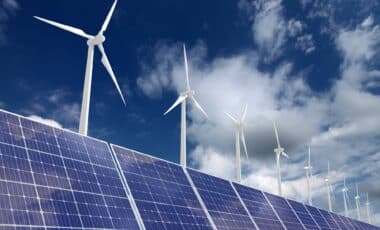
Energy Minister Chris Bowen has repeatedly asserted that renewables are “our cheapest form of energy” and that they’ll eventually lead to cheaper power. But critics argue that this narrative is becoming increasingly disconnected from the reality of rising bills.
Prime Minister Anthony Albanese, too, has leaned heavily on the promise that a coordinated rollout of renewables could lower electricity prices by 20% over the next decade.
Yet, when asked to guarantee that electricity prices would actually fall, he remained non-committal, suggesting instead that the “modelling is out there.”
A Growing Disconnect Between Rhetoric and Reality
As inflation continues to soar and energy prices climb, the government’s renewables promises are being put to the test. Some economists, like Abhijit Surya from Capital Economics, argue that electricity price inflation has been a major factor in the rising cost of living.
The end of generous rebates is driving the inflationary pressure, but it’s not the only factor. Housing costs, food prices, and even alcohol and tobacco are all on the rise, adding to the financial strain faced by everyday Australians.
In the midst of these price hikes, the government’s promises seem increasingly out of sync with the reality many Australians are facing. It remains to be seen whether the renewable energy revolution will deliver the cost savings it has promised—or if it will fall short, leaving a large gap between political rhetoric and the real-world impact on household budgets.