
Millions of American retirees could face lower Social Security payments in the coming years if Congress does not act to address the programme’s projected funding shortfall. The potential reductions would vary by state, with some beneficiaries facing monthly losses of more than $550 under one projection.
Social Security Could Face a Funding Shortfall by 2032
The Committee for a Responsible Federal Budget (CRFB) estimates that Social Security benefits could be reduced by 24% by 2032 if policymakers do not make changes to the programme.
A separate projection from the Social Security Trustees estimates that the programme could have enough funding to cover only 78% of scheduled benefits by 2032. That would correspond to a potential 22% reduction in payments if Congress took no action.
The figures are projections rather than confirmed cuts. The final outcome would depend on decisions made by Congress and changes to the programme’s finances.
15 States Could See Some of the Largest Monthly Reductions
The CRFB has identified 15 states where the projected monthly reduction could be highest.
| State | Potential monthly reduction |
|---|---|
| Connecticut | $556 |
| New Jersey | $554 |
| New Hampshire | $554 |
| Delaware | $549 |
| Maryland | $541 |
| Washington | $531 |
| Minnesota | $530 |
| Massachusetts | $527 |
| Michigan | $523 |
| Utah | $523 |
| Virginia | $522 |
| Kansas | $520 |
| Pennsylvania | $519 |
| Rhode Island | $519 |
| Vermont | $516 |
The figures represent estimated reductions based on the CRFB’s projection and do not mean that retirees in these states have been notified of an upcoming cut. Connecticut has the highest figure on the list, at $556 a month.
How Much Could Retirees Lose?
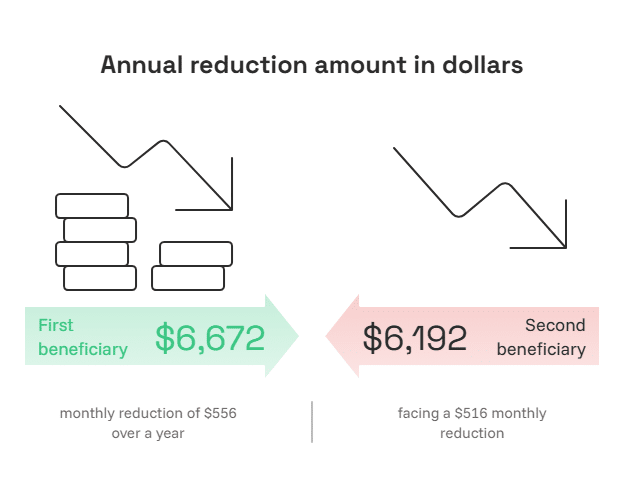
A monthly reduction of $556 would amount to $6,672 over a year if it applied for 12 months. For a beneficiary facing a $516 monthly reduction, the annual difference would be $6,192.
The actual amount lost by an individual would depend on their current benefit and the final percentage reduction applied to payments. The projected figures are therefore best viewed as estimates of the potential financial consequences rather than confirmed payment changes.
Congress Could Still Change the Outcome
The CRFB has warned that policymakers have less than seven years before Social Security is projected to become insolvent under its analysis. The organisation said changes would need to be made to address the programme’s finances.
Possible policy responses could involve changes to taxes, benefits or other parts of the Social Security system. No final legislation has been approved that would impose the projected cuts described above.
A Separate Proposal Would Increase Social Security Payments
The debate over Social Security’s finances is taking place alongside proposals to increase benefits. Senator Bernie Sanders has backed a proposal that would raise Social Security payments by $200 a month, equivalent to $2,400 a year.
The proposal would also extend the Social Security payroll tax to earnings above $250,000. Sanders has argued that households earning $250,000 or less would not face higher taxes under the proposal.
The plan would need approval from Congress before any additional payments could become available.
What Retirees Should Know
The projected reductions are not currently scheduled cuts to Social Security checks. They reflect estimates of what could happen if the programme’s funding problems remain unresolved.
The Social Security Trustees’ projection that only 78% of scheduled benefits could be covered by 2032 highlights the scale of the financial issue facing lawmakers. Until Congress changes the law, retirees should not assume that their payments will automatically fall by the amounts listed in the CRFB projection.
The future level of Social Security benefits will ultimately depend on the legislation and funding decisions made by policymakers.