

The increase is affecting both household budgets and industries that rely on fuel for transportation. Diesel prices have drawn particular attention because the fuel is widely used for moving goods, supporting construction activity and powering other commercial operations.
Rising Fuel Costs Linked to Supply Disruptions
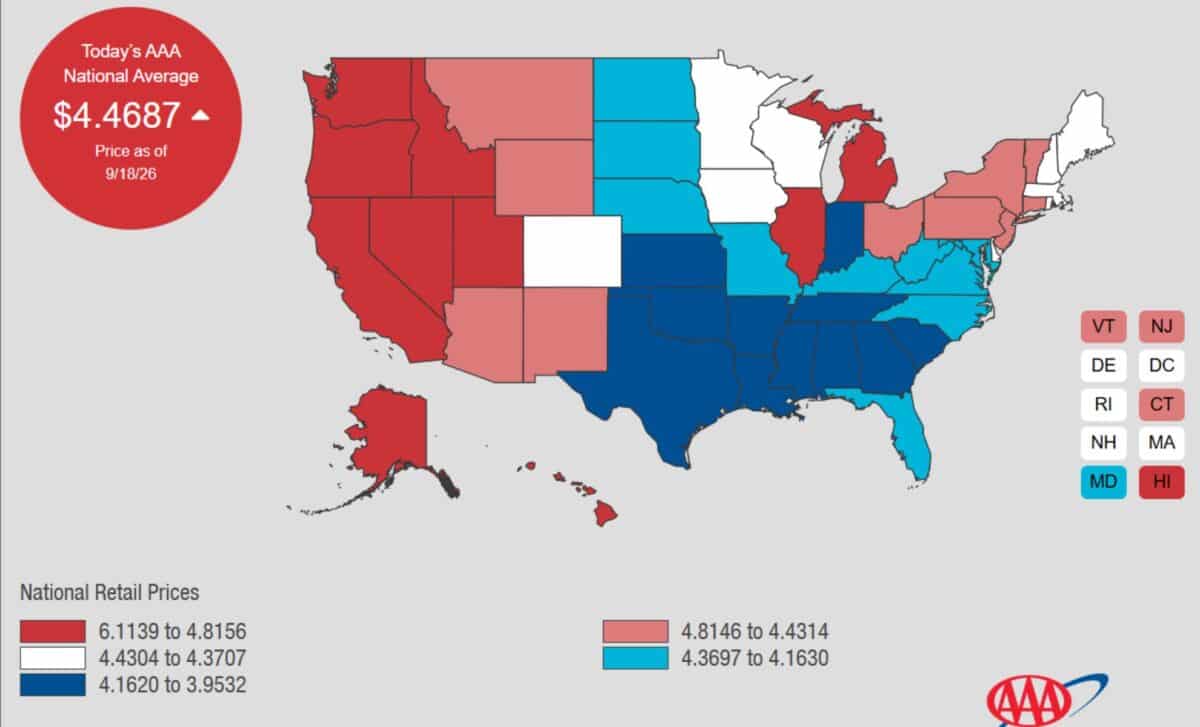
The national average price for gasoline reached $4.44 per gallon on Thursday, rising 7 cents overnight, according to AAA. The figure represents an increase of nearly 50% since the beginning of the Iran war in February. Diesel prices reached a record $6.40 per gallon, up 77 cents since the start of September. According to petroleum expert Patrick De Haan of GasBuddy, continued pressure on global oil supplies has contributed to the recent increases.
Energy analysts have pointed to several factors affecting the market, including reduced refining capacity in the United States and abroad. According to CBS News, the global benchmark Brent crude oil traded around $103 a barrel on Thursday as conflicts involving Iran, Russia and Ukraine, and attacks connected to Houthi rebels affected oil supply routes.
According to Tom Kloza, chief energy adviser for Gulf Oil, fuel prices are being shaped by both supply conditions and refining limitations. A power outage that forced an ExxonMobil refinery outside Chicago to temporarily stop production added pressure in the Midwest, where fuel prices have risen above the national average.
The global supply situation has also been affected by attacks on oil infrastructure. According to the Eurasia Group, attacks on the East-West pipeline in Saudi Arabia removed 4 million barrels per day from the global market. Ukrainian drone strikes targeting Russian oil infrastructure have also reduced Russia’s refining capacity, according to De Haan.
Regional Differences Deepen the Impact on Drivers
Fuel prices vary significantly across the United States, with some regions experiencing sharper increases than others. The Midwest and West Coast have faced stronger pressure because of local refining challenges and supply conditions. In Illinois, gasoline averaged $4.78 per gallon on Thursday, more than 30 cents above the national average. California drivers were paying more than $6 per gallon for gasoline, while the state’s average diesel price reached $8.35 per gallon, according to AAA.
The higher diesel costs have broader effects because many industries depend on the fuel. Tom Kloza said diesel prices can influence transportation costs and affect products that move across the country. He also noted that higher diesel prices could affect households that use heating oil, which is made from diesel.
Around 4 million households in the Northeast rely on heating oil for winter heating, according to Kloza. He said some households using large amounts of heating oil could face significantly higher seasonal expenses.
Fuel markets remain closely tied to international events and the ability of refineries and supply networks to maintain production. For American consumers, the recent increases show how disruptions far from the United States can affect everyday transportation and energy costs.