
The FDA has upgraded a major egg recall to a Class I recall, its highest risk classification, after potentially contaminated eggs were linked to a Salmonella outbreak that has sickened 98 people and hospitalized 26.
The recall involves nearly 19 million eggs produced by Midwest Poultry Services at two farms in Texas. The products were distributed across several states and sold through major grocery chains, including Kroger and Brookshire Grocery.
FDA Moves Recall to Its Highest Risk Category
The Food and Drug Administration classified the recall as Class I on Wednesday, meaning there is a reasonable probability that exposure to the affected products could cause serious adverse health consequences or death.
Midwest Poultry Services, an Indiana-based egg producer, initially announced the voluntary recall in late July.
The company recalled 1,589,577 dozen white-shell and cage-free brown-shell eggs, equal to roughly 19 million individual eggs. The eggs were produced between June 6 and July 3, 2026, with sell-by or best-by dates ranging from July 20 through August 17.
The eggs were produced at two Texas farms after possible Salmonella Enteritidis contamination was identified through the company’s environmental monitoring and root-cause analysis.
Credit: FDA
Recalled Eggs Were Sold Across Six States
The affected eggs were distributed to food-service and retail customers in Texas, Oklahoma and Louisiana.
Consumers could also have purchased them at Kroger stores in Texas and Louisiana and Brookshire Grocery locations in Texas, Oklahoma, Arkansas, Louisiana, New Mexico and Mississippi.
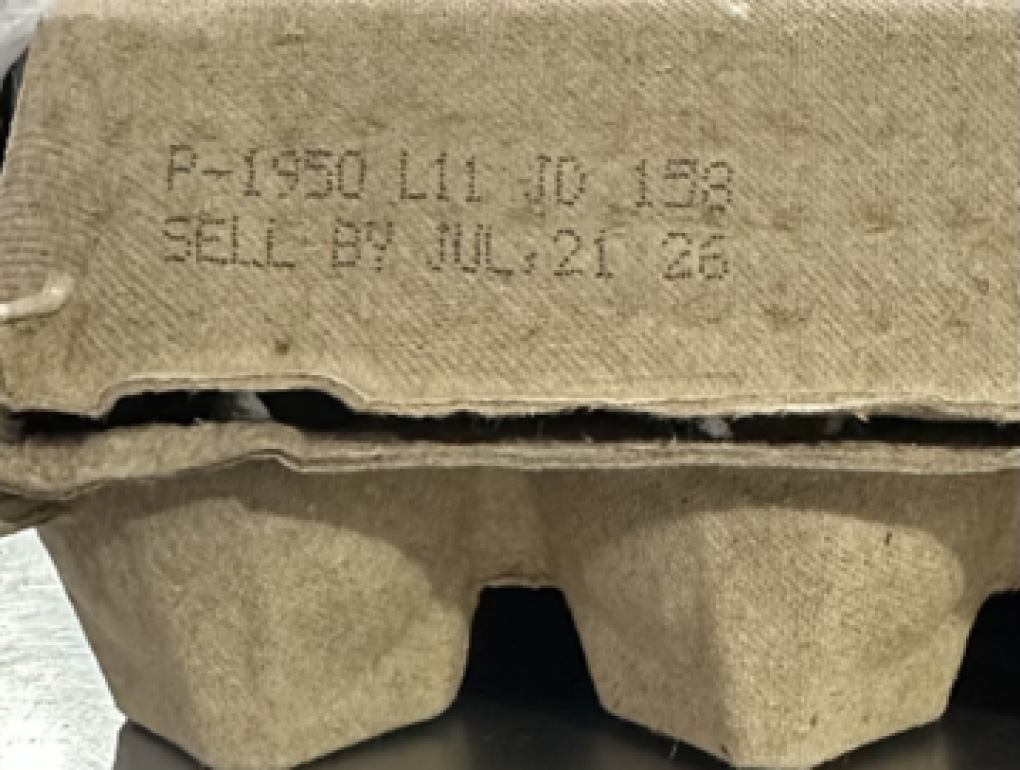
The FDA says consumers should check the sides of their cartons for the identifying codes.
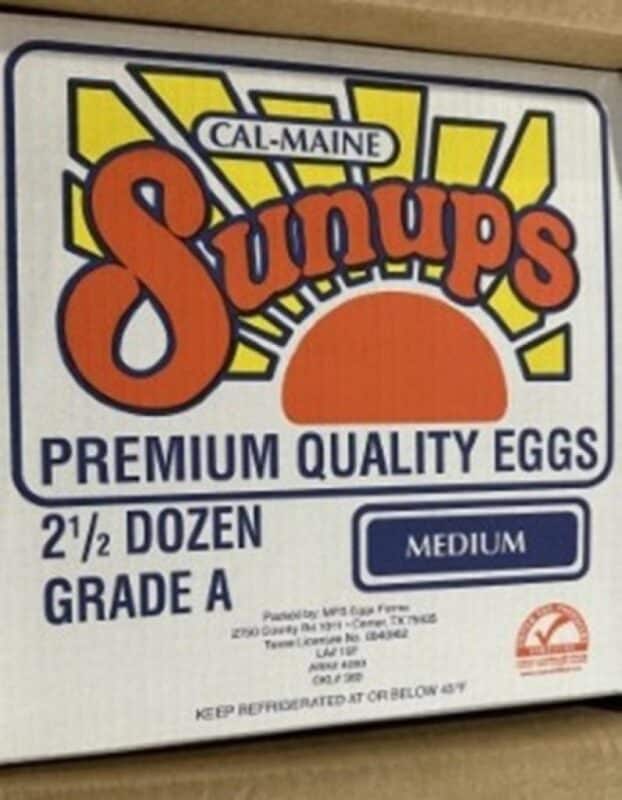
Affected cartons carry either P-1950 or 0840962, along with a Julian date between 157 and 184.
Consumers can consult the FDA’s recall information for examples of affected packaging or contact Midwest Poultry Services at 574-405-9531.
The company says no other Midwest Poultry Services products are included in the recall.
Egg recall upgraded to FDA's highest risk level: 'Serious adverse health consequences or death' https://t.co/cDdnxVX669 pic.twitter.com/ANFOfp7Zwy
— New York Post (@nypost) August 13, 2026
Salmonella Outbreak Has Led to 26 Hospitalizations
The CDC reported on July 24 that the recalled eggs were connected to a Salmonella outbreak involving 98 cases across 17 states. The outbreak had resulted in 26 hospitalizations.
Salmonella infection commonly causes diarrhea, fever and stomach cramps. Other symptoms can include nausea, vomiting and abdominal pain.
According to the New York Post, the recalled eggs were distributed to several states and sold at Kroger and Brookshire Grocery stores.
The CDC says Salmonella symptoms can begin six hours to six days after exposure. Most healthy people recover within four to seven days without treatment, while young children, older adults and people with weakened immune systems face a higher risk of serious illness.
The FDA also warns that Salmonella can occasionally enter the bloodstream and cause more severe complications.
What Consumers Should Do With Recalled Eggs
Anyone who has purchased eggs matching the recalled product codes should not eat them. The CDC recommends throwing the eggs away or returning them.
Surfaces, utensils and other items that came into contact with the recalled eggs should also be cleaned with hot, soapy water or a dishwasher.
People who develop severe symptoms should seek medical attention, particularly when diarrhea is accompanied by a fever above 102 degrees Fahrenheit, persists for more than three days, or becomes bloody. Persistent vomiting or signs of dehydration are also warning signs.
The FDA’s Class I designation now places this egg recall at the agency’s highest level of concern, while the recalled products remain identifiable by the carton codes P-1950 or 0840962 and Julian dates 157 through 184.