
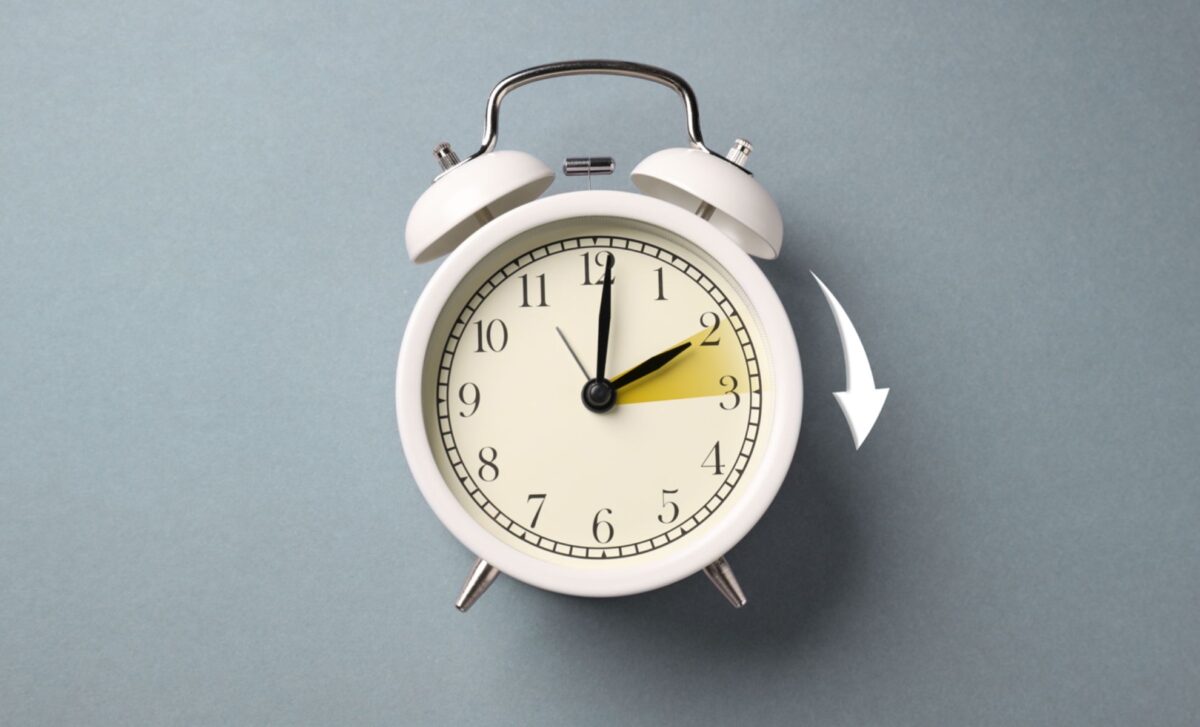
The Sunshine Protection Act passed the House on July 14 in a bipartisan 308-117 vote. President Donald Trump has urged lawmakers to approve the legislation, which would keep clocks on daylight saving time throughout the year. For now, federal law remains unchanged, meaning most of the United States will return to standard time at 2 a.m. local time on Nov. 1.
Senate Support Remains Uncertain before the November Change
The central question is whether the Senate will act before Americans change their clocks. According to USA TODAY, the Senate is in recess until Sept. 14, leaving lawmakers with a relatively narrow period to consider the measure before daylight saving time ends.
Senate Majority Leader John Thune has acknowledged interest in the proposal but has questioned whether enough senators support it. Newsweek reported that lawmakers remain divided, particularly over the prospect of darker winter mornings under permanent daylight saving time.
Norman Ornstein, a resident scholar at the American Enterprise Institute, told Newsweek that a House-passed bill could theoretically move through the Senate quickly through unanimous consent if no senator objected. An objection, he said, would create “time-consuming” procedural hurdles.
“If the leadership really makes it a priority it can do it, since there is almost certainly 60 votes in favor,” Ornstein said. He added that lawmakers could potentially attach the legislation to another must-pass bill, although he remained skeptical that the change would happen.
Trump has repeatedly backed permanent daylight saving time. In an Aug. 4 Truth Social post cited by USA TODAY, he called the practice of changing clocks “foolish, inconvenient and, in some cases, very costly,” and urged Congress to pass the Sunshine Protection Act.
Ending Clock Changes Does Not Mean Agreement on Permanent Daylight Time
Polls cited by both publications show broad dissatisfaction with changing clocks twice each year, but Americans remain divided over what should replace the current system.
According to Newsweek, a 2025 Associated Press-NORC poll found that only 12 percent of American adults supported changing clocks twice annually. When respondents were asked to choose a permanent system, 56 percent preferred permanent daylight saving time, while about four in ten favored permanent standard time.
Other surveys produced different results. A YouGov poll conducted in February found that 64 percent wanted to stop changing clocks, while 43 percent preferred permanent daylight saving time and 28 percent chose permanent standard time. Gallup found 48 percent preferred permanent standard time, compared with 24 percent favoring permanent daylight saving time.
Health and sleep specialists have also raised objections to permanent daylight saving time. The American Medical Association and American Academy of Sleep Medicine support permanent standard time, while researchers cited by USA TODAY have argued that it better matches the body’s natural circadian rhythm.
Permanent daylight saving time would also produce later winter sunrises. Daylight saving time expert David Prerau told Newsweek that in many parts of the country, sunrise could move into the 8 a.m. hour, with some northern and western areas seeing sunrise close to or after 9 a.m. Unless the Senate approves the House bill and Trump signs it into law, clocks across most of the United States will still move back one hour on Nov. 1.