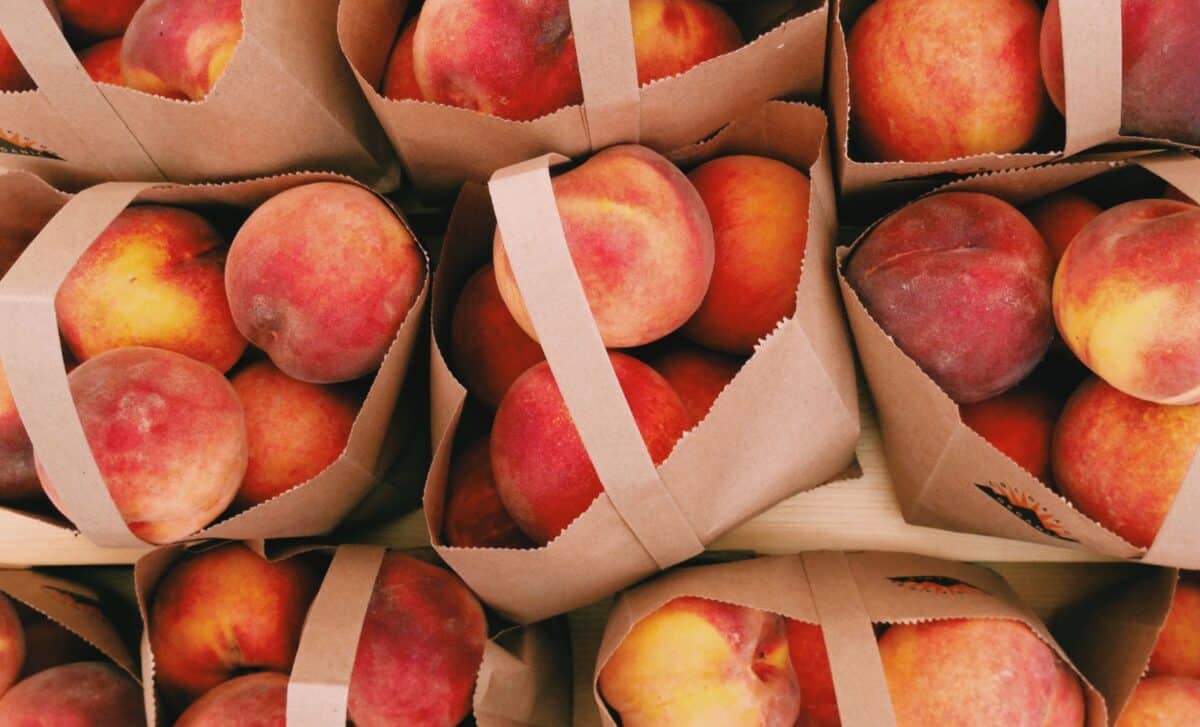
The U.S. Food And Drug Administration has ended a major peach recall involving about 10 million pounds of fruit after a possible Listeria monocytogenes contamination concern was identified at a packing facility. The recall involved 11 peach varieties distributed across the United States, Canada, and Mexico.
The affected peaches were linked to Moonlight Packaging Corporation in Fresno County, California, where a possible contamination issue was discovered in the packing environment. The products included yellow peaches, white peaches, and “peppermint” white peaches sold under Moonlight and Kroger labels.
FDA Confirms Recall Termination After Months Of Monitoring
According to the FDA, the recall was officially terminated on July 31, 2026, after the agency determined that the required corrective actions had been completed. The recall had previously been classified as a Class I recall, the FDA’s highest risk category.
The FDA describes a Class I recall as a situation where there is a “reasonable probability” that consuming an affected product could cause serious health consequences. The classification was linked to concerns involving Listeria monocytogenes found in the packing facility environment.
The FDA stated in its update: “This recall is being conducted because Listeria monocytogenes was identified in the packing facility environment.”
The bacteria can survive in refrigerated conditions, making sanitation controls and monitoring procedures a major focus for food producers. The recall involved 33 different lots of peaches identified through specific packaging information, UPC codes, and product labels.
These tracking systems allowed companies and regulators to identify affected products and coordinate removal efforts. The termination of the recall indicates that the response process was completed after the necessary safety measures were addressed.
©Shutterstock
Recalled Peaches Reached Major Retailers Across 39 States
The recalled peaches were distributed widely across North America, reaching customers through several major grocery chains. Retailers connected to the affected products included Kroger, Trader Joe’s, Walmart, Costco, Target, Sprouts, Food Lion, and Wegmans.
The fruit was sold individually and in multi-fruit packages, increasing the complexity of identifying all affected products. Because fresh produce often moves through multiple distribution channels, companies relied on supply chain records to locate and remove recalled batches.
The recall covered 39 U.S. states, including California, Texas, Florida, New York, Pennsylvania, Washington, and Arizona. Products were also shipped to Canada and Mexico.
The scale of the recall demonstrates how agricultural products can move quickly through national and international markets. Detailed tracking information helps companies and government agencies identify affected items and communicate safety information to consumers.
What Consumers Should Know About The Peach Safety Alert
The recalled peaches are no longer part of an active recall following the FDA termination notice. The case remains a reminder of the importance of food safety inspections, sanitation procedures, and product tracking systems.
Consumers who purchased peaches during the recall period were advised to check packaging details and avoid consuming products connected to the affected lots. Fresh produce can appear normal even when contamination risks exist, which is why recall notices rely on product identification information.
Listeria monocytogenes is a foodborne bacterium that can pose health risks, especially for certain vulnerable groups. Food companies focus heavily on prevention because contamination can occur in production environments without visible changes to products.
The FDA’s response timeline shows the steps involved in managing a large recall, from identifying a possible contamination source to verifying corrective actions. These procedures help limit risks and restore confidence in affected products.
A Large Recall Closes After Widespread Supply Chain Impact
The end of the peach recall closes a significant food safety event that began with a contamination concern at a packing facility and expanded into a nationwide response. Millions of pounds of peaches were involved, and the products reached consumers through some of the largest retail networks in North America.
The FDA’s final update confirms that the recall process has been completed. The case highlights how producers, retailers, and regulators coordinate during food safety incidents while showing the role of modern tracking systems in protecting consumers.
The recall also reflects the challenges of managing fresh food distribution on a large scale. From farms and packing facilities to grocery stores, every stage of the supply chain plays a role in identifying and addressing potential risks.