
The Atlantic hurricane season is approaching, and early forecasts are already raising concerns across the United States. Meteorologists say the 2026 season could produce between 11 and 16 named storms, including several hurricanes capable of causing major destruction. Even though predictions suggest a slightly below-average season, experts stress that the danger remains very real. From the Gulf Coast to the Carolinas and up the Eastern Seaboard, millions of Americans may face powerful storms that can intensify quickly and strike with little warning.
The forecast, reported by The New York Post, highlights a growing concern among meteorologists: storms are strengthening faster and forming closer to land. That combination can leave communities with little time to react. As a result, forecasters are urging residents to begin preparations now rather than waiting until a storm appears on the radar.
A Forecast That Still Raises Concern
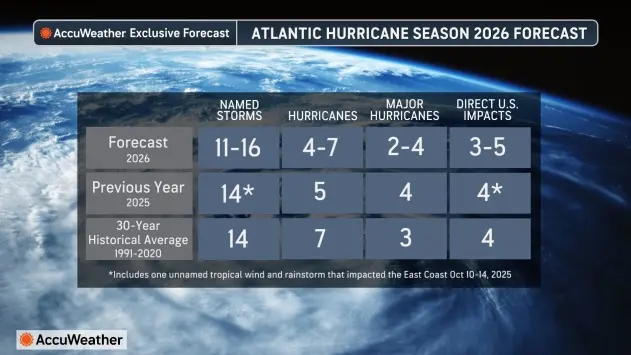
Early projections from AccuWeather indicate the Atlantic could produce 11 to 16 named storms during the 2026 hurricane season. Among them, four to seven may develop into hurricanes, while two to four could become major hurricanes reaching Category 3 strength or higher. Even if these numbers appear slightly lower than historical averages, experts warn that the danger cannot be measured by storm count alone.
Meteorologist Alex DaSilva, AccuWeather’s lead hurricane expert, stresses that the focus should be on potential destruction rather than total storms. “Even if it’s expected to be a slightly below average hurricane season, we can still see major hits across the United States,” noted DaSilva, imploring folks to take all necessary precautions.
A single powerful hurricane can devastate cities, disrupt power grids, flood communities, and force mass evacuations. History has shown that quiet seasons can still produce catastrophic events if one storm takes the right path toward densely populated areas. That uncertainty is exactly what keeps forecasters watching the Atlantic closely each year.
Rapid Intensification Is A Growing Threat
One of the biggest concerns for meteorologists in recent seasons has been rapid intensification, when storms strengthen dramatically within a short period of time. In some cases, systems have jumped from tropical storms to major hurricanes in less than 24 hours, leaving communities scrambling to prepare.
“This year we are very concerned about rapid intensification, very similar to the last couple of years,” said DaSilva.
Warmer ocean waters provide the energy that fuels this explosive strengthening. When conditions align, warm seas, favorable wind patterns, and moist air, storms can quickly transform into powerful hurricanes capable of producing destructive winds and storm surge.
For residents along the Gulf Coast and Atlantic shoreline, rapid intensification means that waiting for the final forecast could be too late. A storm that appears manageable one day may become a major threat the next.
The Rising Danger Of “Homegrown” Storms
Another troubling trend involves storms forming close to the U.S. coastline rather than traveling across the Atlantic from Africa. These systems are often called “homegrown storms” because they develop in areas such as the Gulf of Mexico, the western Caribbean, or the western Atlantic.
According to forecasters, these storms pose a unique risk because they dramatically reduce preparation time.
“Storms that form within a few hundred miles of the coast can leave people, businesses and officials with less time to prepare and evacuate,” DaSilva explained.
Unlike traditional hurricanes that take a week or more to cross the ocean, these near-shore systems can organize rapidly and move toward land within days, or even hours.
“These ‘homegrown development’ storms that spin up near the US coast can pose bigger threats with a lot less time to react, compared to storms that form off the coast of Africa and take a week or more to trek across the open Atlantic.”
That compressed timeline can make evacuation decisions far more difficult for officials and residents alike.
Why Experts Say Americans Should Prepare Now
Meteorologists emphasize that preparation is the most powerful defense against hurricane danger. Waiting until a storm warning is issued can lead to empty store shelves, traffic jams during evacuations, and limited access to emergency supplies.
“There is no reason to let your guard down this year. It only takes one storm to cause major damage, disruption and heartache,” he warned. “Review your insurance coverage, safety plans and local evacuation routes now.”
Forecasters encourage households to assemble emergency kits well before the season begins. That includes water, non-perishable food, flashlights, batteries, first-aid supplies, and backup power sources.
“Make sure your emergency supplies are stocked up,” he added.