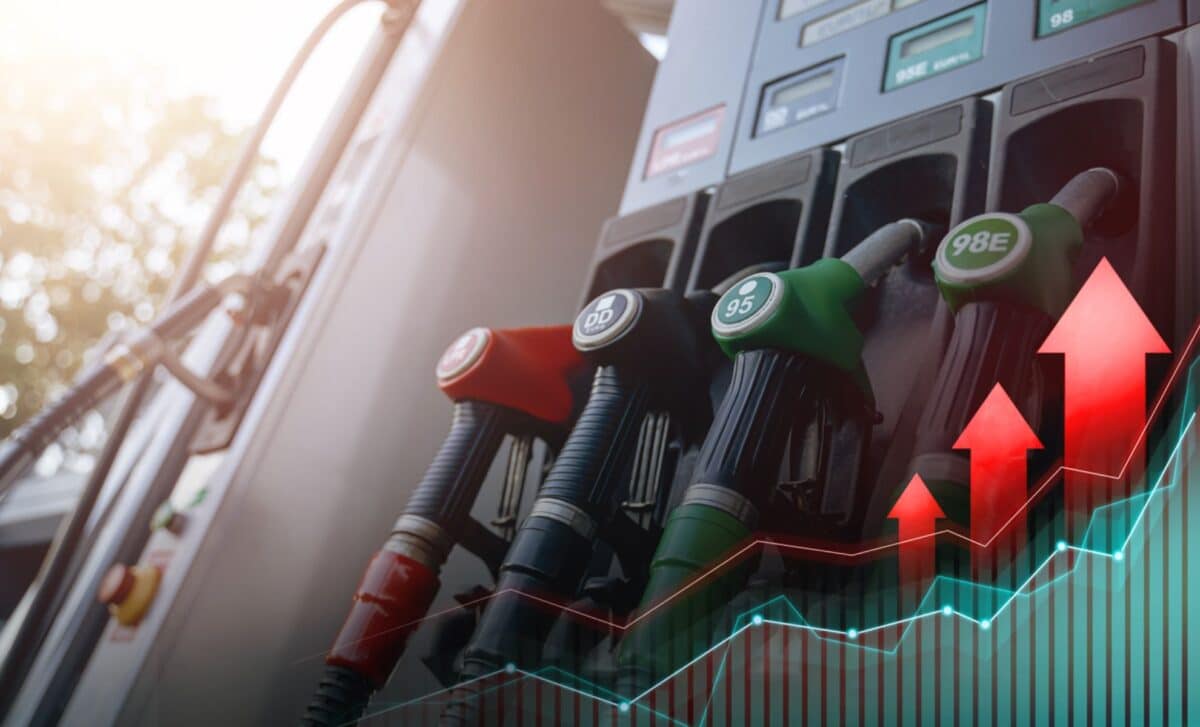
The price increase is already drawing attention because fuel costs are a visible part of everyday life for American consumers. As the conflict in the Persian Gulf affects oil supply routes, analysts warn that the ripple effects could extend well beyond the gas pump, influencing transportation, supply chains, and the broader economy.
Conflict in the Persian Gulf Drives Rapid Fuel Price Increases
The national average price for regular gasoline rose to $3.32 per gallon on Friday, marking a seven-cent increase in a single day and a total jump of about 34 cents over the past week. According to the American Automobile Association (AAA), this represents an increase of roughly 11 percent and the highest national average since September 2024.
The spike follows the start of a conflict in the Middle East that began on February 28. Energy markets reacted quickly as fighting and regional tensions threatened the movement of oil through the Persian Gulf, one of the world’s most critical energy transit routes.
Oil traders have been closely watching the Strait of Hormuz, the narrow waterway that connects the Persian Gulf to global shipping lanes. Iranian threats toward oil tankers and growing uncertainty about maritime security have made insurers and shipping companies more cautious about sending vessels through the area.
According to research scientist Josh Rhodes of the Webber Energy Group at the University of Texas at Austin, even disruptions that do not directly remove oil supply can slow the flow of crude. He explained that if tankers cannot obtain insurance or face increased risk while passing through the region, the movement of oil can be delayed or restricted.
Oil markets have reflected those concerns. Domestic crude oil futures had risen by more than 20 percent since the conflict began, and refiners have begun passing those higher costs to consumers through rising gasoline prices.
Rising Diesel and Transport Costs May Ripple through the Economy
The increase is not limited to gasoline. Diesel fuel, which powers most freight transportation in the United States, has climbed even more sharply. According to AAA data, the average price of diesel reached $4.33 per gallon on Friday, the highest level recorded since November 2023.
Higher diesel prices often translate into higher costs for moving goods across the country. Trucking companies, shipping firms, and logistics providers depend heavily on diesel fuel, meaning that rising prices can quickly affect supply chains.
Vidya Mani, a visiting professor at Cornell University who studies supply chains, said disruptions in energy markets can trigger a chain reaction across industries. According to Mani, many sectors in North America rely on materials and components that originate in regions affected by geopolitical tensions.
“You would think in North America, or anywhere, they’re insulated, but we are dependent on goods that come from these places,” she told The New York Times, noting that price shocks can move through interconnected supply systems.
The consequences may extend to sectors such as food production, chemical manufacturing, and electronics. Higher fuel costs also influence airline ticket prices and home heating expenses, since energy markets are deeply interconnected. According to the same source, similar dynamics occurred after Russia’s invasion of Ukraine in 2022, when rising oil prices drove up jet fuel costs and led to more expensive airline travel.