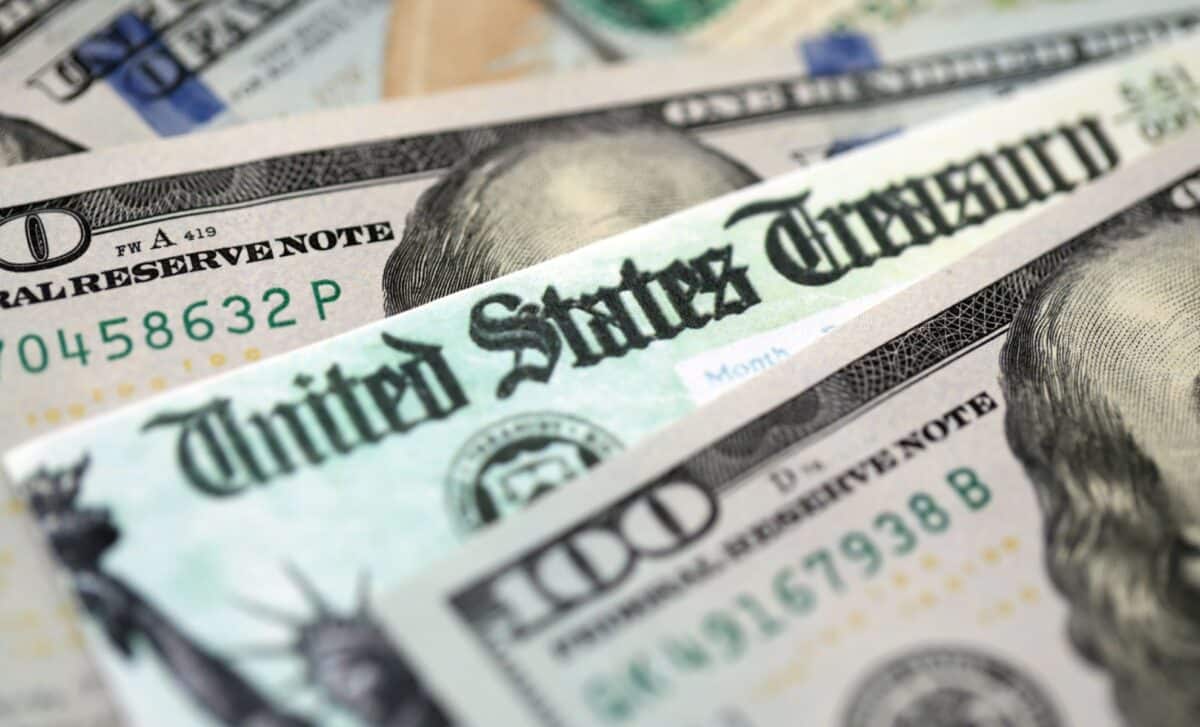
Stimulus checks issued by state governments have become less common in 2026. Once a widespread method to provide financial relief during economic strain, these programs have largely come to an end or narrowed in scope.
A handful of states still operate relief initiatives, but most of them have not renewed one-time payments or scheduled new rounds of distribution. Only one state has confirmed new direct payments in 2026, while others, such as New Jersey and Virginia, are relying on alternate mechanisms to deliver tax relief.
Colorado Remains the Only State with Active Payments in 2026
According to information available in official public reports, Colorado is currently the only U.S. state that has confirmed direct payments to residents in 2026. These are not new stimulus checks but are instead part of the TABOR refund program, a constitutional requirement under the Taxpayer’s Bill of Rights that obligates the state to return excess revenue to taxpayers.
The most recent round of TABOR refunds was issued in the early weeks of 2026, based on a fiscal surplus recorded in 2025. According to the official distribution plan, residents who filed their 2024 state income tax returns on time and lived in Colorado for the entire year of 2024 were eligible to receive payments. The refund amounts can reach up to $1,130 for individuals.
Payments were primarily sent through direct deposit or as physical checks, and state authorities have not announced any further rounds of refunds for the remainder of 2026. These refunds represent the continuation of a long-standing mechanism tied to the state’s fiscal policy, rather than a new stimulus initiative.
New Jersey Introduces New Property Tax Relief for Seniors
While most states have discontinued stimulus programs, New Jersey is an exception in terms of offering broader relief structures. Although the state is not issuing standard stimulus checks in 2026, it has launched StayNJ, a new program specifically aimed at providing property tax relief for seniors.
According to official sources, StayNJ disbursements will follow a quarterly schedule as outlined in the law. Eligible residents are expected to receive regular payments, but they must submit a single application that typically covers all related state rebate programs, including ANCHOR and Senior Freeze.
The ANCHOR program continues to offer substantial benefits, with some homeowners eligible for up to $1,750. However, the application period for benefits tied to the 2025 fiscal year closed in October of that year, and new payment schedules for ANCHOR have yet to be publicly detailed for 2026.
Unlike Colorado, New Jersey’s payments are tied to specific programs and demographic criteria, primarily benefiting older homeowners rather than the general taxpaying population. According to reporting from state agencies, StayNJ marks a shift toward targeted tax relief rather than universal direct payments.
Meanwhile, states such as New York and Virginia have completed their final rounds of 2025 tax relief programs. New York’s inflation relief checks of up to $400 were a one-time measure in late 2025, and officials have not indicated plans to renew them this year. Similarly, Virginia issued rebates of $200 for individuals and $400 for couples, based on 2024 tax returns. Those payments concluded in early 2026, and no further rounds are scheduled.
The decrease in stimulus checks reflects a broader trend across state governments, as they return to pre-pandemic financial structures and shift from emergency aid to long-term relief programs tied to property taxes and income eligibility.