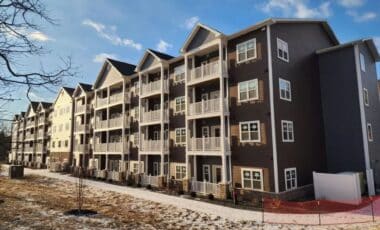

Housing affordability has taken center stage in American domestic policy debates as millions struggle to enter a real estate market marked by high prices and steep interest rates. In response, Donald Trump has unveiled a two-part initiative aimed at easing the burden on potential homeowners.
The proposed policies, banning large institutional investors from purchasing single-family homes and injecting $200 billion into mortgage-backed securities,seek to curb demand-side pressures and lower borrowing costs. But early reactions from economists and housing experts suggest the plan may do little to address the underlying issue: the persistent shortage of homes.
Measures Focus on Mortgage Costs and Investor Activity
Trump’s first proposed measure seeks to bar major institutional investors from buying single-family homes, a move intended to reduce competition and free up properties for individual buyers. The second aims to have the federal government purchase $200 billion in mortgage bonds, which could potentially reduce mortgage rates.
According to CBS News, Carl Weinberg, chief economist at High Frequency Economics, said these moves could make “mortgages a little cheaper” and “housing a little more affordable.” Similarly, Ben Ayres of Nationwide Economics estimated that the bond purchase might lower mortgage rates by up to 0.35 percentage points, enough to “spur more spending activity.”
Yet, while the initiatives target prominent concerns in today’s housing debate, experts point out their limited scale. Gennadiy Goldberg, head of U.S. rates strategy at TD Securities, noted that institutional investors with over 100 properties account for only about 1% of the national single-family housing stock. According to the American Enterprise Institute (AEI), unless these investors are required to sell their current holdings, the ban’s impact on housing availability could be marginal.
Goldberg also cautioned that stimulating demand without increasing supply could backfire. “If consumers are able to afford more homes because monthly payments are lower, home prices tend to rise more quickly,” he said, underlining a potential inflationary effect of lowering borrowing costs without parallel action on supply.
Long-Standing Housing Shortage Remains Unaddressed
Despite the attention on mortgage rates and investor competition, economists emphasize that the core of the housing crisis lies elsewhere: the country’s long-running shortage of homes. Years of underbuilding following the 2008 financial crisis, coupled with homeowners holding onto low-rate mortgages, have drastically reduced housing turnover and new availability.
According to Goldman Sachs, the United States would need to construct around 4 million additional homes beyond its current pace to meet demand. This supply issue, experts argue, cannot be resolved through federal monetary tools alone.
Janneke Ratcliffe, vice president at the Urban Institute, highlighted the structural nature of the problem, explaining that “most solutions to create new housing take a long time to come to fruition.” She added that restrictive local zoning laws and high land costs further complicate efforts to expand housing stock.
Edward Pinto, senior fellow at the AEI Housing Center, stated that without unlocking more supply, affordability concerns will persist. “We need to either activate the existing supply that is underutilized, or take steps to allow the building of new homes,” Pinto said. These kinds of supply-side solutions, however, typically fall under local and state jurisdiction, limiting the federal government’s ability to act swiftly.
While Trump’s proposals may offer some relief to prospective buyers in the short term, most analysts agree that the broader housing market will not see sustainable improvement unless supply constraints are directly addressed.