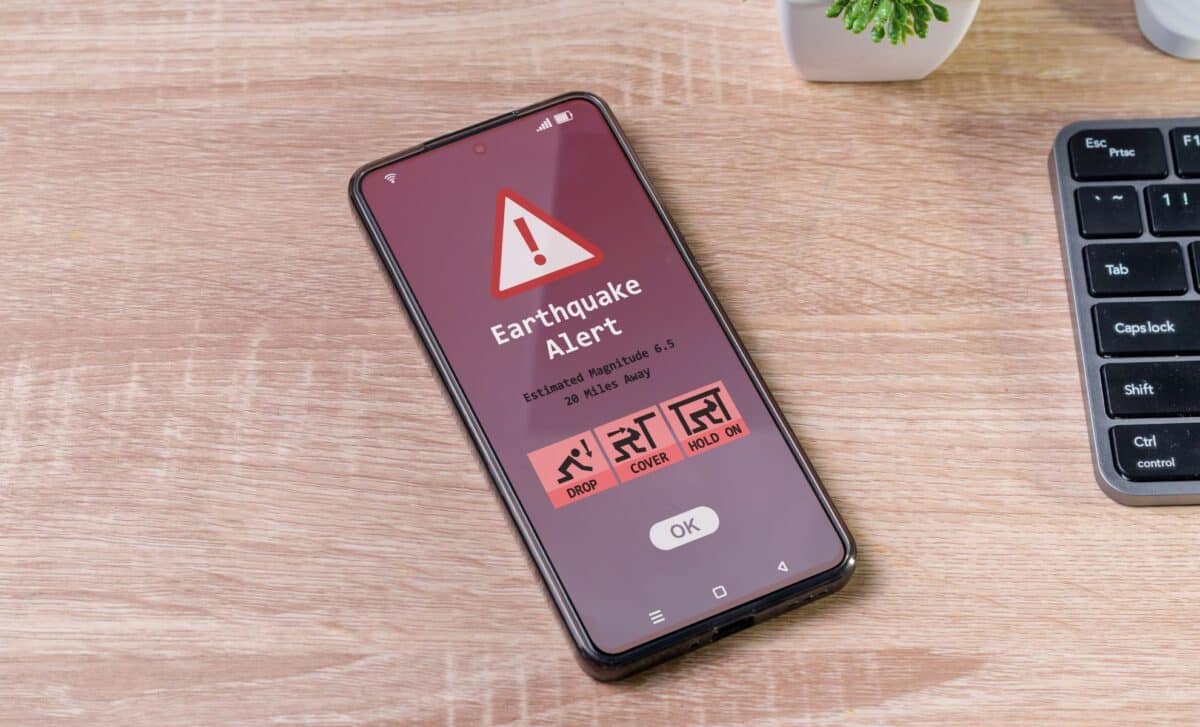
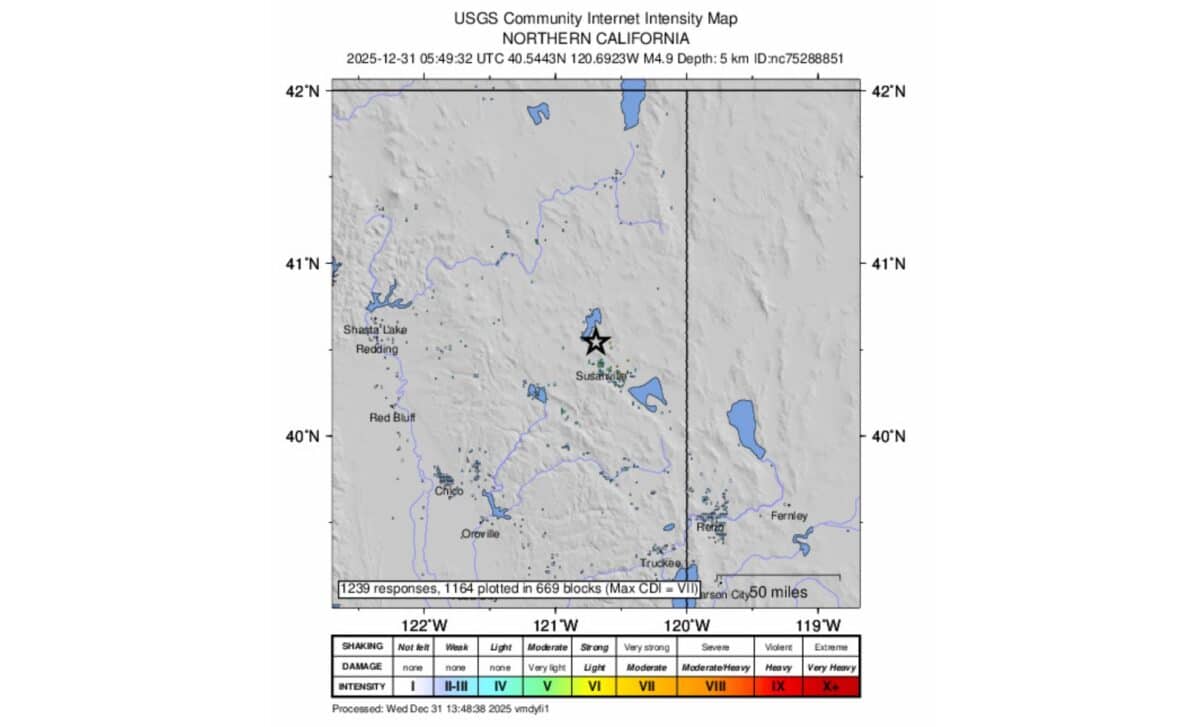
The 4.9-magnitude quake struck at 9:49pm local time near Susanville, California, according to the US Geological Survey (USGS), prompting widespread ShakeAlert notifications urging residents to “drop, cover, hold on.” Although no injuries or damage have been reported, the event has reignited discussion on infrastructure resilience and preparedness in earthquake-prone areas.
Susanville, a town of approximately 18,000 people, lies within the Basin and Range region, a geologically active area near the Honey Lake and Eagle Lake fault zones. The quake originated at a depth of 5.6 miles, shallow enough to intensify the perceived shaking on the surface. Reports of tremors came from as far afield as western Nevada and southern Oregon, with users in places like Reno, Carson City, and even Sacramento sharing their experiences online.
Shakealert System Activated Across California, Nevada and Oregon
The quake triggered the ShakeAlert system, a mobile early warning service coordinated by the USGS. This technology aims to give residents a few seconds of advance notice before shaking begins. On Tuesday night, mobile phones lit up in numerous cities and towns, including South Lake Tahoe, Pollock Pines and Malin. According to the USGS, over 1,200 people submitted shaking reports through their online platform, aiding scientists in tracking the intensity and spread of the event.
Aftershocks followed throughout the night, with at least six recorded by the USGS, ranging between 2.1 and 2.5 in magnitude. The most recent occurred just after midnight on Wednesday. While these were comparatively minor, the agency reported a 60 percent probability of aftershocks of magnitude 3.0 or greater in the following week, and a 16 percent chance of another quake similar in strength to the initial 4.9.
Social media saw a steady stream of personal accounts, with some residents describing the quake as “quite a jolt.” One Susanville local posted on Facebook: “The house started shaking, then the phones went off. Lasted a few seconds, definitely longer and stronger than the last one.” Others shared their experiences from nearby communities, such as Westwood and Paradise, where alerts were received shortly after the ground began to shake.
Ongoing Seismic Activity Raises Questions in the Bay Area
While Tuesday’s quake centred on Susanville, it coincided with a series of smaller quakes occurring further south, near San Ramon in the East Bay. Since 9 November, the USGS has detected more than 300 earthquakes in that area. The sequence began with a 3.8-magnitude tremor and has persisted into late December, with the latest measuring 2.7 on 23 December.
San Ramon lies on the Calaveras Fault, a significant offshoot of the San Andreas system, which has long been considered capable of producing large earthquakes. According to the USGS, there is a 72 percent chance that a magnitude 6.7 earthquake could occur in the broader San Francisco Bay Area by 2043. Despite this, USGS research geophysicist Annemarie Baltay said the recent activity does not necessarily suggest a larger event is imminent. “These small events, as all small events are, are not indicative of an impending large earthquake,” she explained in comments reported by Patch.
Nonetheless, experts continue to advise residents in seismically active zones to remain prepared. “We live in earthquake country, so we should always be prepared for a large event,” Baltay added. The convergence of recent seismic events highlights the ongoing need for vigilance in regions situated along major fault lines. While modern systems like ShakeAlert are proving effective in rapid response, long-term readiness remains a shared responsibility across the West.