
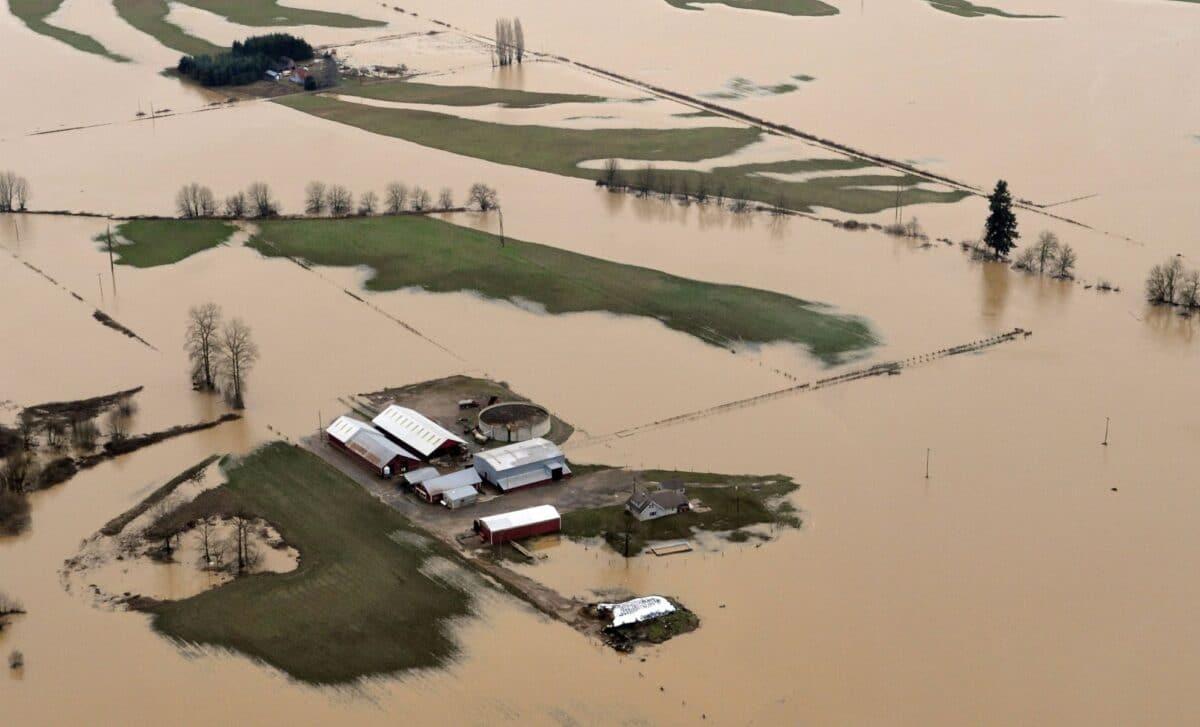
State officials argue that proactive flood prevention efforts are essential, not only to safeguard lives but to save money in the long term. However, due to legal battles and administrative delays, Washington’s flood defense initiatives are stuck in limbo.
Funding Delays Create Risk for Vulnerable Communities
Washington has been hit by a series of destructive storms, including an atmospheric river that dumped massive amounts of rain and led to widespread flooding. In response, the state has been working to strengthen its flood protection measures through projects such as levees, flood walls, and home buyouts in flood-prone areas. These projects rely on federal grants, which have been delayed under the Trump administration.
Earlier this year, the administration sought to cancel approximately $182 million in funding from FEMA’s Building Resilient Infrastructure and Communities (BRIC) program. The BRIC program is crucial for states like Washington, which are at high risk of natural disasters. The cuts prompted a legal challenge, and in December, the states secured a favorable ruling. However, according to Tim Cook, Washington’s state hazard mitigation officer, the funds have yet to be released, leaving critical projects in limbo.
In the interim, the state is also waiting for approval of another $31 million in disaster prevention grants. These funds are tied up in an additional policy that requires all spending over $100,000 to be personally approved by Homeland Security Secretary Kristi Noem. This has delayed vital downpour mitigation efforts, including a program designed to acquire and elevate properties that have flooded multiple times in the past decade.
Delays Impact Specific Flood Mitigation Projects
The delay in federal funds has had direct consequences for several ongoing projects in Washington. For instance, the city of Hoquiam, located on the state’s coast, was slated to receive nearly $100 million to build miles of levees and concrete flood walls to protect it from rising waters. According to court filings, the state and local governments had already invested more than $31 million in pre-construction costs, but the cancellation of the BRIC funding has left the project at a standstill.
Brian Shay, the city administrator of Hoquiam, expressed concerns about the economic impact of the delay, saying the levee project is key to the town’s recovery. “We’ve been economically challenged for so long. People have been really counting on this, and so there’s been a lot of worry and confusion,” he said.
Similarly, Pierce County near Tacoma had planned to buy a flood-prone mobile home park and relocate residents to safer areas. The recent storms saw floodwaters reaching some homes in the park, underscoring the urgent need for such projects. However, the BRIC funding delays mean the project, initially scheduled for completion by 2027, is unlikely to meet its deadline.
The city of Orting, located south of Seattle, also faces the risk of catastrophic flooding due to an aging levee system. Mayor Joshua Penner warned that a failure of the current levee could cause extensive damage, though a new setback levee is still awaiting federal funding.
Despite the setbacks, state officials maintain that downpour mitigation projects remain a priority. Curt Hart, a spokesperson for Washington’s Department of Ecology, emphasized that even though the stalled projects won’t prevent this round of flooding, continuing these efforts is crucial for future disaster prevention.
The funding delays underscore the vulnerability of communities already struggling with the consequences of climate change. With Washington state continuing to face the growing threat of extreme weather events, officials argue that investing in flood prevention today is critical to mitigating the costs and devastation of future disasters.