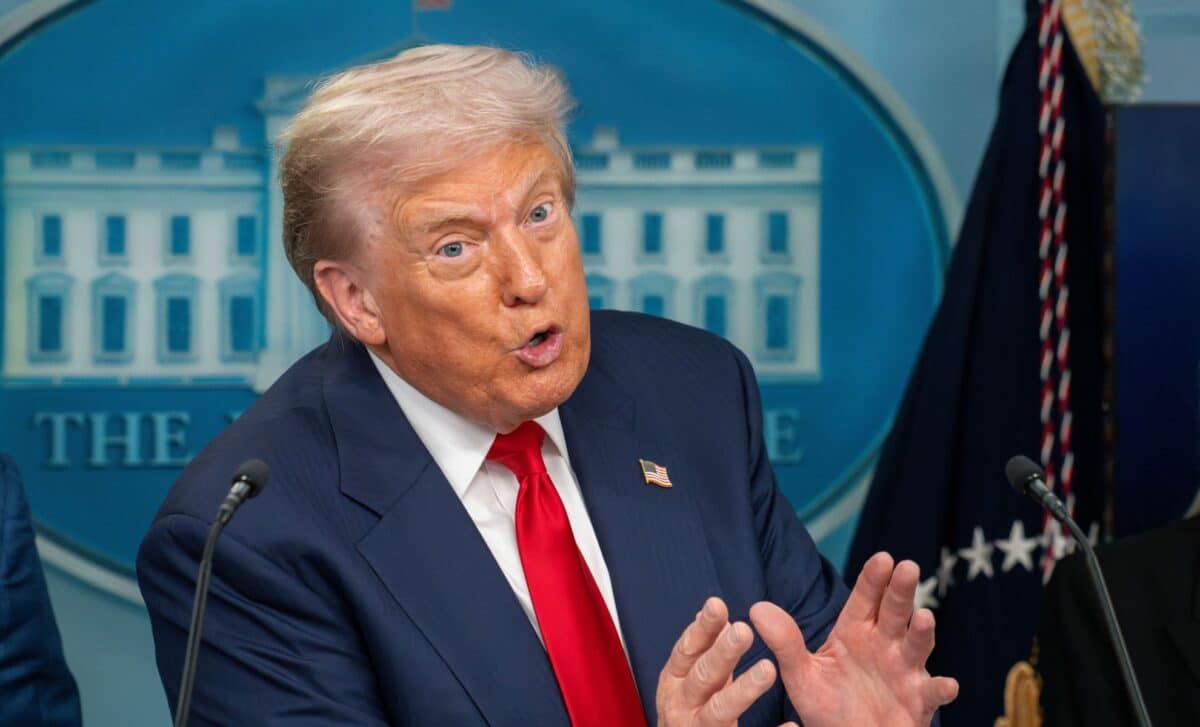
While the president made this announcement during a prime-time televised address, there remains uncertainty regarding the exact mechanisms of this financial commitment. The news is already stirring debate on Capitol Hill and among military families, as the funds for these dividends are supposedly derived from President Trump’s tariffs. Yet, questions linger about how the government’s spending process will be impacted without Congress’ direct approval.
The “Warrior Dividend”: What is It?
The “warrior dividend” is a payment of $1,776 per service member, a symbolic amount that references the founding year of the United States. Trump framed this payout as a recognition of the sacrifices made by military personnel, with 1.45 million active-duty and reserve service members set to receive the bonus. According to a White House statement, the payments will be distributed before Christmas.
The president’s speech pointed to the success of his administration’s tariffs as the primary source of funding for the payments. “We made a lot more money than anybody thought because of tariffs,” Trump said, emphasizing that the military “deserves it more than anyone.” However, there are concerns about the administration’s ability to directly allocate such a large sum without congressional approval. Typically, the U.S. Congress holds the power to approve federal spending, and many are questioning the legality of this approach.
Funding the Dividend: A Source of Controversy
While President Trump credited tariffs as the source of the funds, the lack of detailed information on how the $2.6 billion will be appropriated is raising eyebrows. The payments will be sent to service members in pay grades O-6 and below, as well as those in reserve components on active-duty orders. The total cost of the dividend, estimated at nearly $2.6 billion, was described by a senior administration official as part of a broader defense budget initiative.
Tariffs, which are taxes imposed on imported goods, are often touted by the Trump administration as a mechanism to boost U.S. revenue. However, critics argue that while tariffs may have brought in some additional funds, they also drive up the cost of living for American consumers, particularly in areas like food and goods. The president’s reliance on tariff revenue to fund such a substantial payment to military service members could be seen as a political maneuver, particularly as the 2026 presidential election draws near.
Additionally, the timing of this announcement, just before the holiday season, has led some to view it as an effort to boost Trump’s image with key voter groups, such as military families. While military personnel have generally supported Trump’s policies, especially in regard to defense spending, the long-term impact of this policy could be more politically motivated than a genuine effort to improve service members’ welfare.
While the checks may be seen as a positive gesture by some, the broader context cannot be ignored. With public concern about the economy and inflation rates still high, the president’s claim that tariffs are the primary funding source for the dividend has led many to question whether the administration’s economic policies are truly working for everyday Americans.