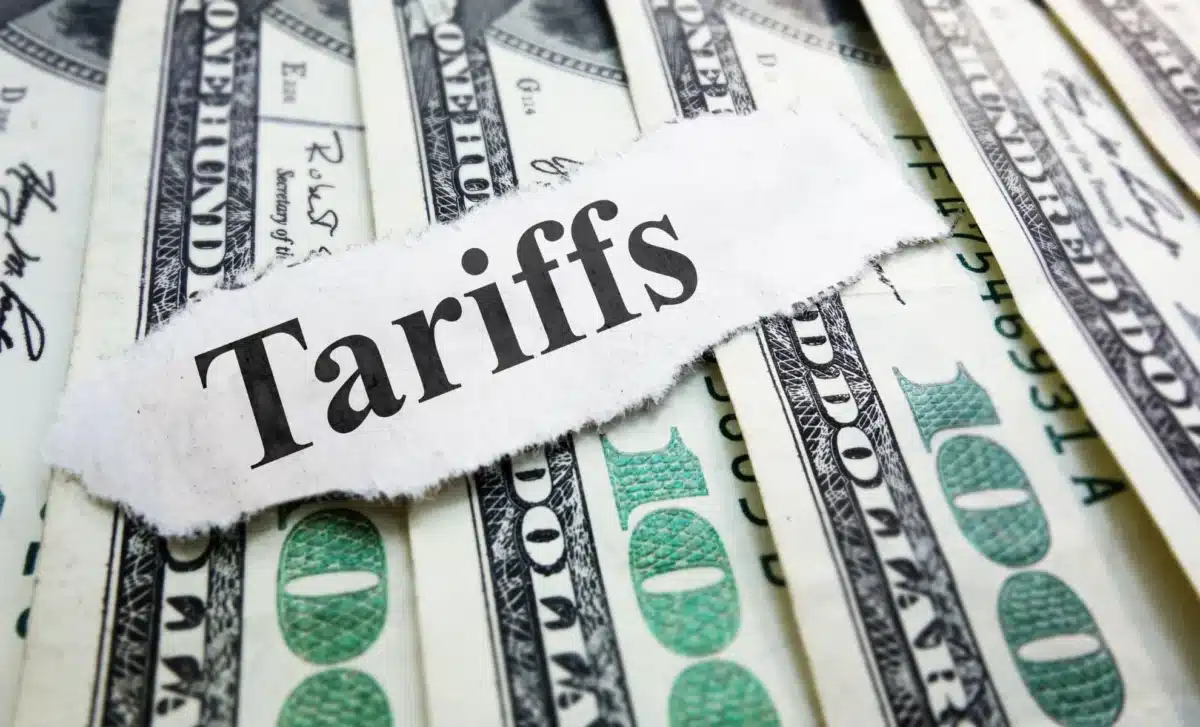
At the heart of the case is Trump’s interpretation of the International Emergency Economic Powers Act (IEEPA), a law typically used to implement sanctions. The Court’s eventual decision could impact the future reach of presidential authority in trade, but analysts note the president has already tested other laws, and may use them again.
Legal Challenges to IEEPA Tariffs Raise Questions over Executive Power
The Supreme Court recently heard oral arguments over Trump’s use of the IEEPA to justify broad tariffs on foreign goods, including a 10% blanket tariff on all countries and a 125% duty on Chinese imports. The hearing, fast-tracked due to its constitutional implications, revealed skepticism from several justices.
Justice Neil Gorsuch pointed to a troubling shift of power from Congress to the White House, stating, “As a practical matter, in the real world, [Congress] can never get that power back,” according to Business Insider. Justices Amy Coney Barrett and Brett Kavanaugh also questioned the administration’s legal reasoning, suggesting the IEEPA may not support such expansive economic measures.
The IEEPA, enacted in the late 1970s, allows presidents to regulate imports during national emergencies. Trump interpreted this authority broadly to justify tariffs during trade negotiations, a move legal scholars say stretches the original intent of the law. Historically, IEEPA has been used for imposing economic sanctions, not sweeping trade duties.
If the Supreme Court finds that Trump overstepped, it could curtail future presidents’ ability to unilaterally impose tariffs under emergency powers. But Trump’s legal team has already prepared alternative options.
Fallback Strategies Include Older Trade Laws with Proven Durability
If IEEPA is off the table, Trump could still rely on Section 301 of the Trade Act of 1974 and Section 232 of the 1962 Trade Expansion Act. Both were used during his first term and have withstood previous legal challenges.
According to Kathleen Claussen, professor at Georgetown Law and an international trade expert, “Big picture questions down to small, detailed nuances — those were all tested back in Trump One.” Courts have upheld tariffs imposed under both laws, including in lawsuits brought by U.S. importers.
Section 301 allows tariffs in response to unfair trade practices or violations of international trade law. Trump used it extensively in his trade war with China, and the Biden administration has continued and expanded some of those measures. According to Rachel Brewster, a trade law professor at Duke University, Section 301 offers a “broad standard” and could even incorporate Trump’s earlier trade deals.
Meanwhile, Section 232 lets presidents impose duties on goods that threaten national security. Trump applied this law to products ranging from steel to bathroom vanities. The law has already cleared judicial hurdles, making it a reliable backup.
Two other, less common provisions may also be on the table: Section 122, which allows a temporary blanket tariff for up to 150 days to address balance-of-payment issues, and Section 338, a 1930s-era law allowing duties on countries that discriminate against U.S. exports. Both laws are rarely used but legally available.
While the Supreme Court’s decision could limit Trump’s preferred approach, trade analysts suggest he has a range of legal tools available. Whether he returns to the White House or not, the path forward for U.S. trade policy will likely depend less on legal constraints, and more on political will.