More than 1,200 flights were cancelled across the United States on Tuesday, with thousands more delayed. Transportation Secretary Sean Duffy warned that unless the House passes the bipartisan deal swiftly, further reductions could cripple air travel during one of the busiest periods of the year.
Shutdown Deal Stalls as Aviation Sector Reels
Though the US Senate passed legislation to end the longest government shutdown in the country’s history late on Monday, the bill is still awaiting a House vote before it can be signed into law. According to CNN, the House Rules Committee advanced the measure in an early morning vote, with hopes for full passage by Wednesday evening. Yet for air travellers, the disruption is far from over.
The FAA‘s mandate, introduced on 7 November, requires a phased reduction in daily flight operations at 40 high-traffic airports. Starting at 4%, it rose to 6% on Tuesday, with further cuts of 8% and 10% planned for Thursday and Friday. These reductions were imposed due to acute staffing shortages among air traffic controllers and Transportation Security Administration workers, many of whom have worked over six weeks without pay.
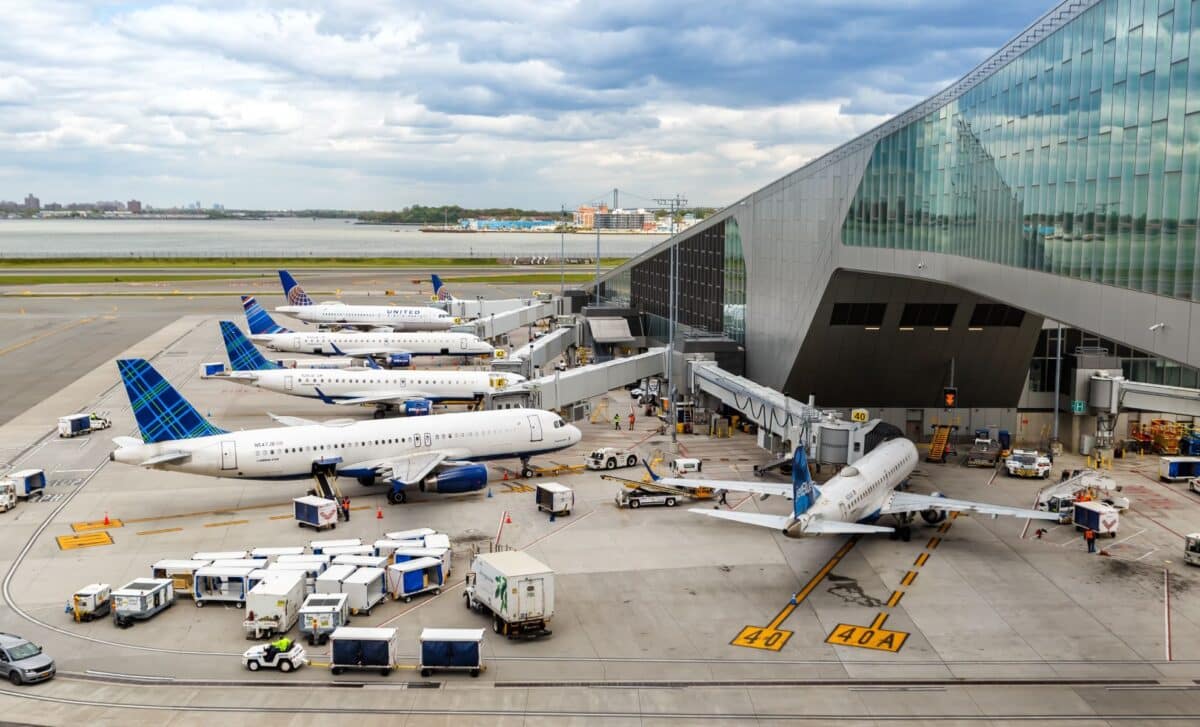
According to FlightAware, over 1,200 flights were cancelled by Tuesday evening, with more than 3,000 delayed. United Airlines alone cancelled 269 flights on Tuesday, with another 271 planned for Wednesday. American Airlines and Southwest each dropped around 200 flights, while Delta confirmed cancellations across multiple hubs.
Speaking at a press conference from Chicago O’Hare International Airport, Sean Duffy warned of escalating disruption. “If the House doesn’t act, we’ll see more than 10% disruption—and possibly airlines grounding planes altogether,” he said. Duffy praised air traffic controllers who continued to work, calling for them to receive bonuses. “
Weather, Staffing and Politics Compound Crisis
In parallel to the staffing crisis, adverse weather across large swathes of the country has further complicated efforts to maintain flight schedules. Heavy snowfall and freezing temperatures affected operations in the Midwest, Northeast, and southern states, where over 60 million people experienced unseasonable cold.
Chicago, New York, Atlanta, Dallas-Fort Worth and Washington D.C. reported the highest number of cancellations. According to The Guardian, some arriving flights into O’Hare faced delays of up to five hours on Monday due to a combination of poor weather and limited staffing.
Nick Daniels, President of the National Air Traffic Controllers Association, highlighted the risks to public safety: “This is the erosion of the safety margin the public never sees, but America relies on every single day,” he said. Daniels warned that fatigue and stress were mounting among workers, with increasing reports of call-outs and retirements.
Adding to the complexity, airlines now face the logistical challenge of repositioning aircraft and crews scattered across the country. Some planes are no longer where they should be, a result of the cascading effects of cancelled routes and weather delays. Though President Trump has indicated support for the bill, political disagreements over unrelated provisions—such as healthcare subsidies and Department of Justice oversight—continue to slow the process.
With Thanksgiving approaching, the nation’s travel infrastructure is under extreme pressure. The coming days will reveal whether Congress can act swiftly enough to prevent further disruption—or if the travel gridlock will deepen just as millions prepare to fly home.