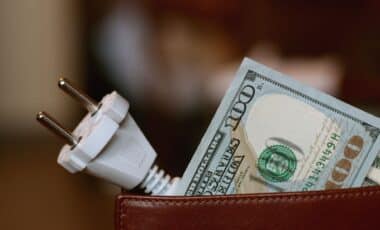

President Donald Trump is once again proposing a new round of stimulus checks — this time funded not by deficit spending or borrowing, but directly from the federal government’s rising tariff revenues. The payments, estimated to range from $1,000 to $2,000, would act as a kind of national dividend returned to the American people from the record sums generated through import duties.
According to reporting by The U.S. Sun, the administration has been evaluating several ways to manage the tariff windfall. While few official details have been confirmed, recent interviews and court filings suggest that multiple scenarios remain under consideration.
$214.9 Billion In Tariffs Fuels Trump’s Stimulus Pitch
Since the start of 2025, the U.S. Treasury has collected a staggering $214.9 billion in revenue from foreign import tariffs, based on official data. In September alone, tariff income reached $31.3 billion, just $73 million below the record set in August.
These tariffs are imposed on goods brought into the country, with American companies footing the bill when purchasing from international suppliers. These costs are often passed along to consumers, showing up as price increases on store shelves.
Despite that burden, Trump argues the upside is significant — and ripe for redistribution.
“We’re going to do something, we’re looking at something. Number one, we’re paying down debt. Because people have allowed the debt to go crazy,” said Trump in an interview with One America News.
“We also might make a distribution to the people, almost like a dividend to the people of America. We’re thinking maybe $1,000 to $2,000 – it’d be great.”
This would mark the fourth time stimulus checks are considered under Trump’s economic initiatives, and this time the proposal comes with real funding already in federal accounts. The former president framed the idea as a payback for consumers indirectly affected by his tariff policy — a way of turning trade strategy into direct household relief.
The DOGE Dividend That Never Was
The tariff refund plan follows a more ambitious — and ultimately unfulfilled — proposal launched earlier this year: the so-called DOGE stimulus checks.
Named after the Department of Government Efficiency (DOGE), the plan involved returning $5,000 per person by redistributing 20% of savings reportedly achieved by cutting waste across federal agencies.
In a February speech, Trump said:
“The numbers are incredible, Elon. So many millions, billions – hundreds of billions. And we’re thinking about giving 20% back to the American citizens.”
The idea quickly gained traction on social media but didn’t hold up under scrutiny. Tax expert Armine Alajian quickly sounded the alarm.
Don’t start counting on DOGE stimulus checks yet. Economists have questioned DOGE’s math, saying the numbers just don’t add up at this point – she told The U.S. Sun.
“It doesn’t look like it’s fully baked at this point in time, so it’s not possible to predict if or when these checks could become a reality.”
Though the DOGE checks never materialized, the new tariff-based plan is different in one crucial way: the money is already there. Whether that means checks will follow remains to be seen.
Supreme Court Set To Decide Fate Of Tariff-Funded Relief
The proposal comes at a legally fragile moment for the entire tariff system. In late August, a federal appeals court ruled that Trump overstepped his authority by using emergency powers to impose wide-ranging tariffs. The court said such powers are reserved for Congress or must follow existing trade frameworks.
The current tariffs remain in effect until mid-October, pending further review. The Supreme Court is expected to hear arguments on the matter when it opens its new session in November.
Despite the looming legal threat, the administration remains confident in its stance.
“We look forward to ultimate victory on this matter with the Supreme Court,” White House spokesperson Kush Desai wrote in a statement to Fox News Digital.