
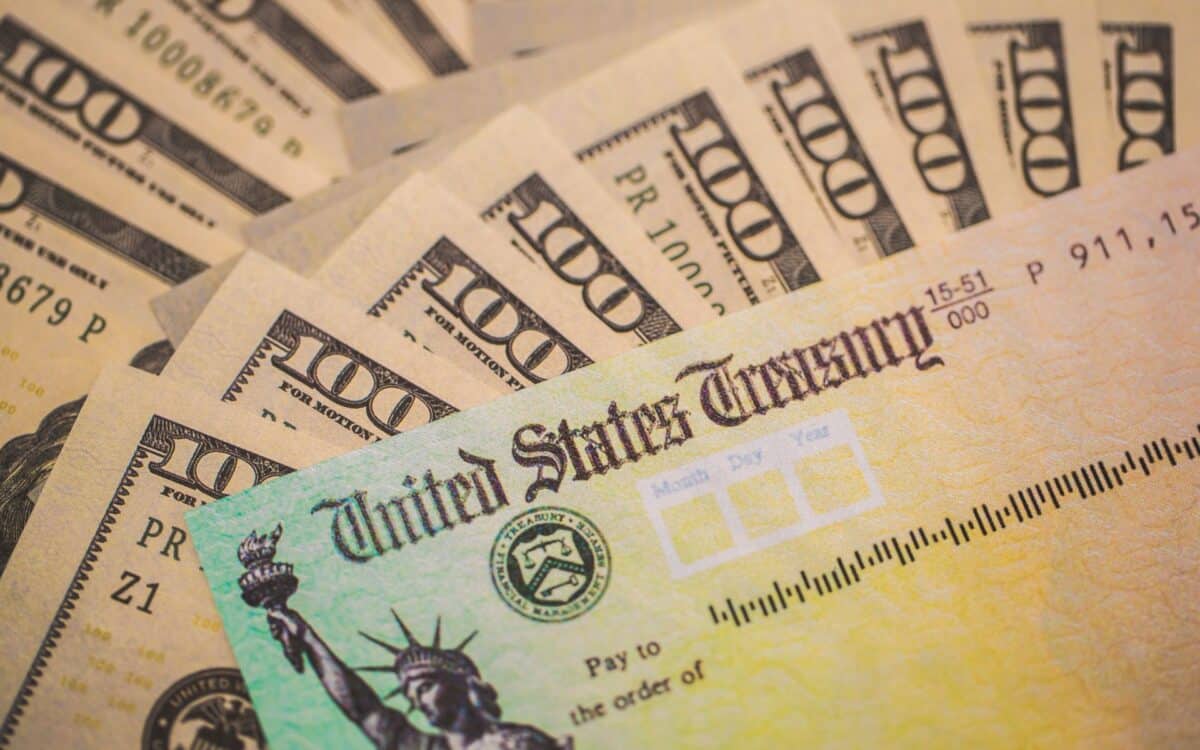
Rumors have been circulating about a potential new round of $2,000 stimulus checks for Americans, raising hopes for another wave of financial assistance. Various claims suggest these payments could be distributed through a Direct Deposit program or as part of a targeted relief effort.
However, official confirmation is still pending, and no new legislation has been passed to authorize such payments. According to an article from The US Sun, some websites and social media accounts are claiming these funds could be issued soon, but there is no official backing from the IRS or Treasury Department at this time.
Understanding the Stimulus Check Speculation
Recently, rumors have been circulating about a potential new round of $2,000 stimulus checks for Americans. These claims have been widely shared across social media platforms and websites, leaving many people hopeful for additional federal financial relief.
However, there is no official confirmation from the IRS, Treasury Department, or Congress to back up these claims. Without new legislation, these rumors appear to be nothing more than speculation.
The Direct Deposit program could be a convenient way for the government to distribute the payments quickly, but until Congress approves new legislation, such a program is purely hypothetical. The government would need to pass new laws before issuing any new payments, and with the current economic conditions, a $2,000 check seems increasingly unlikely.
Why These $2,000 Checks Are Unlikely
The idea of $2,000 payments stems from past government actions during the COVID-19 pandemic, when Americans received stimulus checks to help ease the financial strain caused by the global crisis. Between 2020 and 2021, three rounds of stimulus checks were distributed, ranging from $600 to $1,400 per individual.
The payments were meant to help those struggling with job losses, inflation, and other financial burdens. But the situation is different today.

For a new round of $2,000 payments to be issued, Congress would need to pass new legislation, and as of now, there has been no official proposal for such a program. The government’s focus has shifted away from pandemic-era relief, and economic conditions have improved in many areas.
While inflation remains a concern for many households, there is no concrete plan to provide more stimulus checks.
Moreover, previous rounds of relief had strict eligibility requirements, and if such a program were to be introduced, it would likely follow similar guidelines. Those with annual incomes below $75,000 for individuals and $150,000 for couples would likely qualify. However, without legislation, these payments remain uncertain.
Alternative Financial Relief Programs Across the U.S.
Even though a new federal Direct Deposit program for $2,000 is not currently on the horizon, Americans can still benefit from various state-level relief programs. Many states are offering financial assistance in the form of tax credits, rebates, and other initiatives to combat inflation and support their residents.
For example, New York residents are receiving inflation relief checks up to $400, depending on income and filing status. Similarly, residents in Georgia, Pennsylvania, and Massachusetts are benefiting from tax credits or rebates aimed at easing the financial burden caused by inflation.
These programs are designed to help households with the rising cost of living, and eligibility often depends on income thresholds and filing status.
In Alaska, residents are receiving $1,702 as part of the state’s Permanent Fund Dividend, which is distributed annually to eligible residents. This program has been in place for years and serves as a direct benefit to Alaskans, providing them with a share of the state’s oil revenue.
Additionally, some states have introduced guaranteed income programs to assist low-income families. For instance, California is providing $725 per month to 200 low-income families through the Families First Economic Support Pilot Program (FFESP).
In Ohio, families experiencing homelessness will receive a payment of $1,500 upfront, followed by monthly payments of $500 for 11 months under the Stabilize Families program. Maryland is also offering $1,000 monthly payments for one year as part of a guaranteed basic income initiative.
No $2,000 Stimulus Checks, But Relief is Available
While the idea of a $2,000 federal stimulus check is enticing, there is currently no evidence to suggest that such payments will be issued. The rumors are largely unfounded, and the government has not announced any plans to issue more direct payments to Americans.
However, there are still various state-level programs offering financial relief to those who need it most. If you live in a state with such programs, it’s important to stay informed and check eligibility to take advantage of these opportunities.